 Image 1 of 2
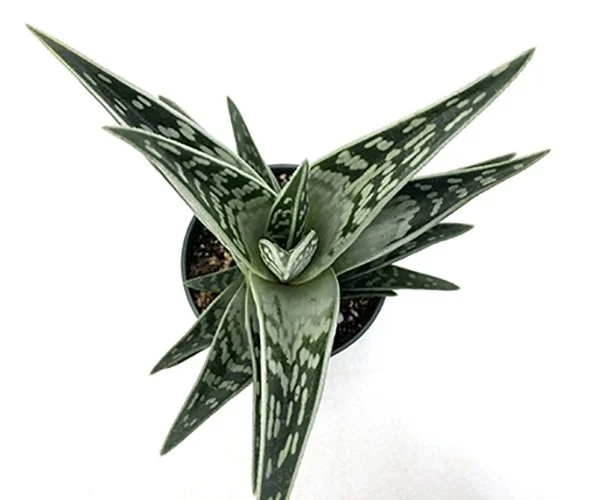 Image 2 of 2
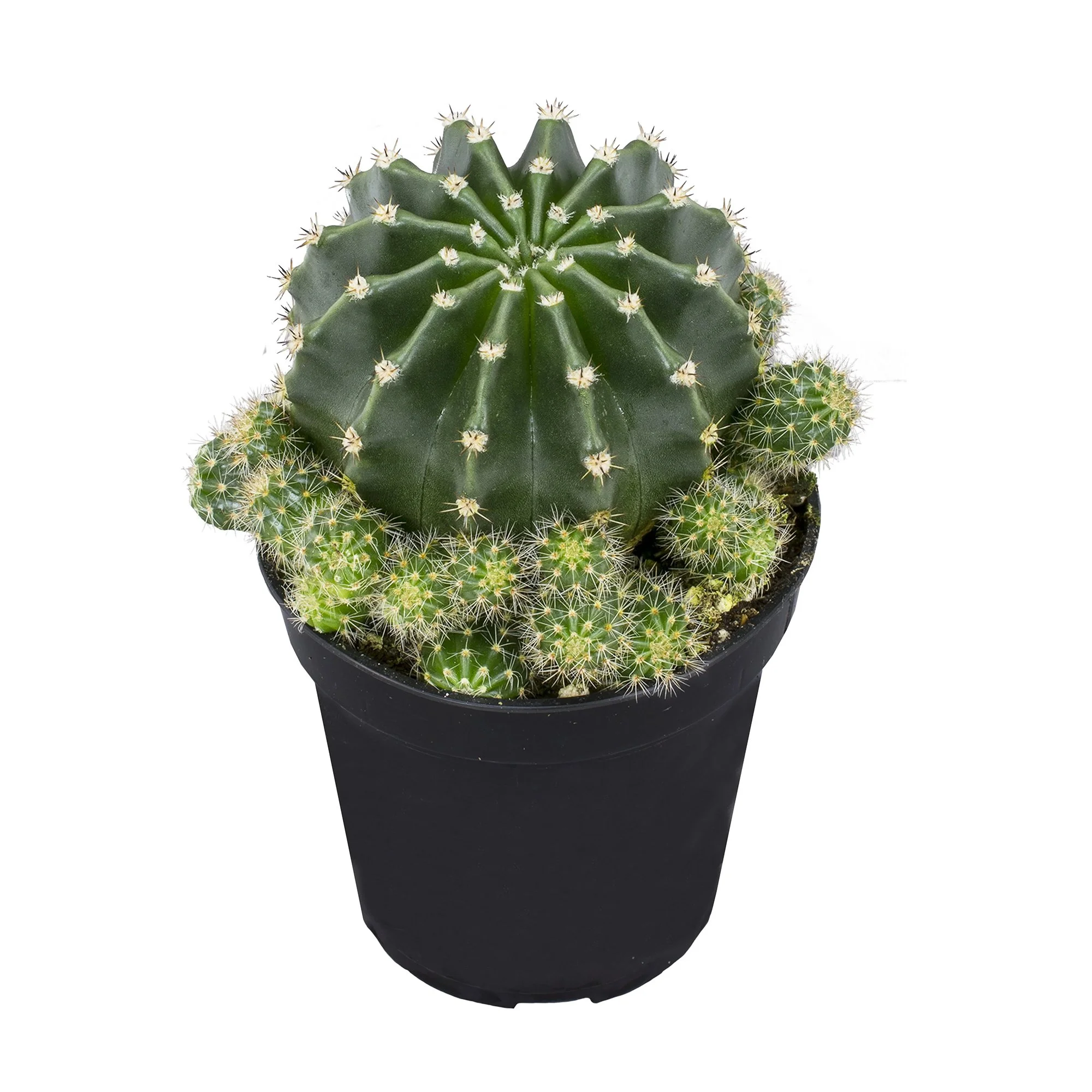
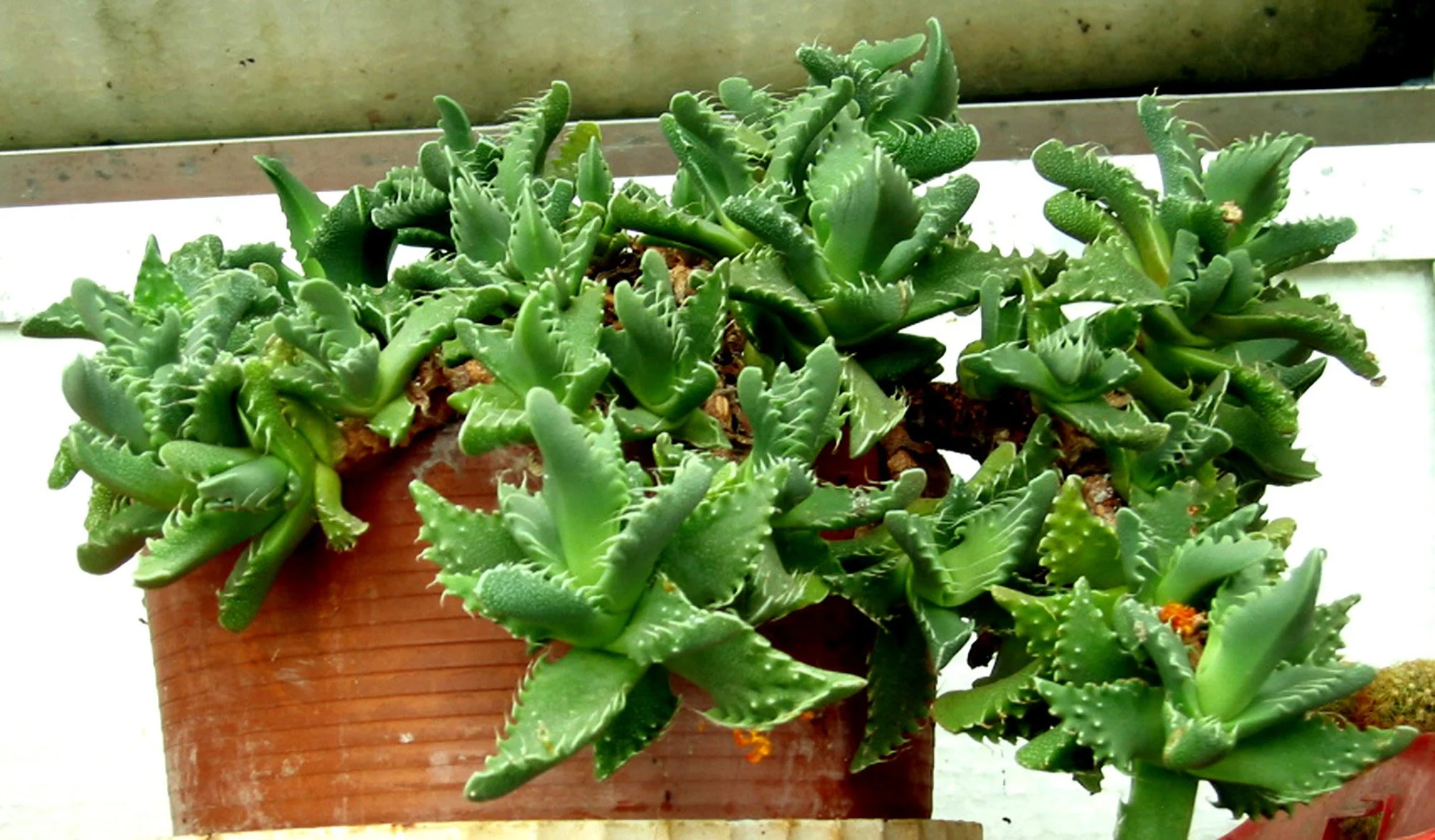
Botanical Name: Aloe variegata
Common Names: Tiger Aloe, Partridge Breast Aloe
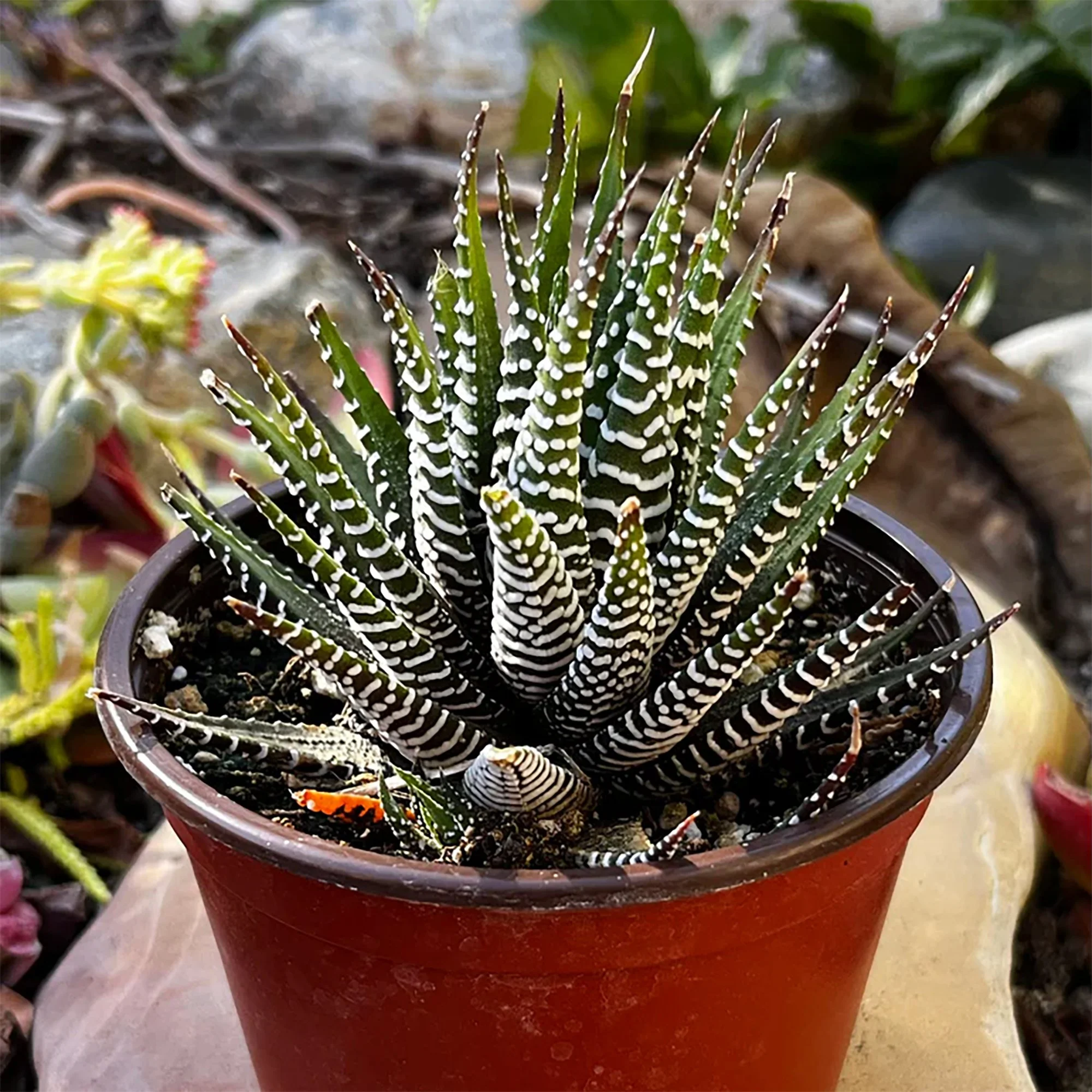
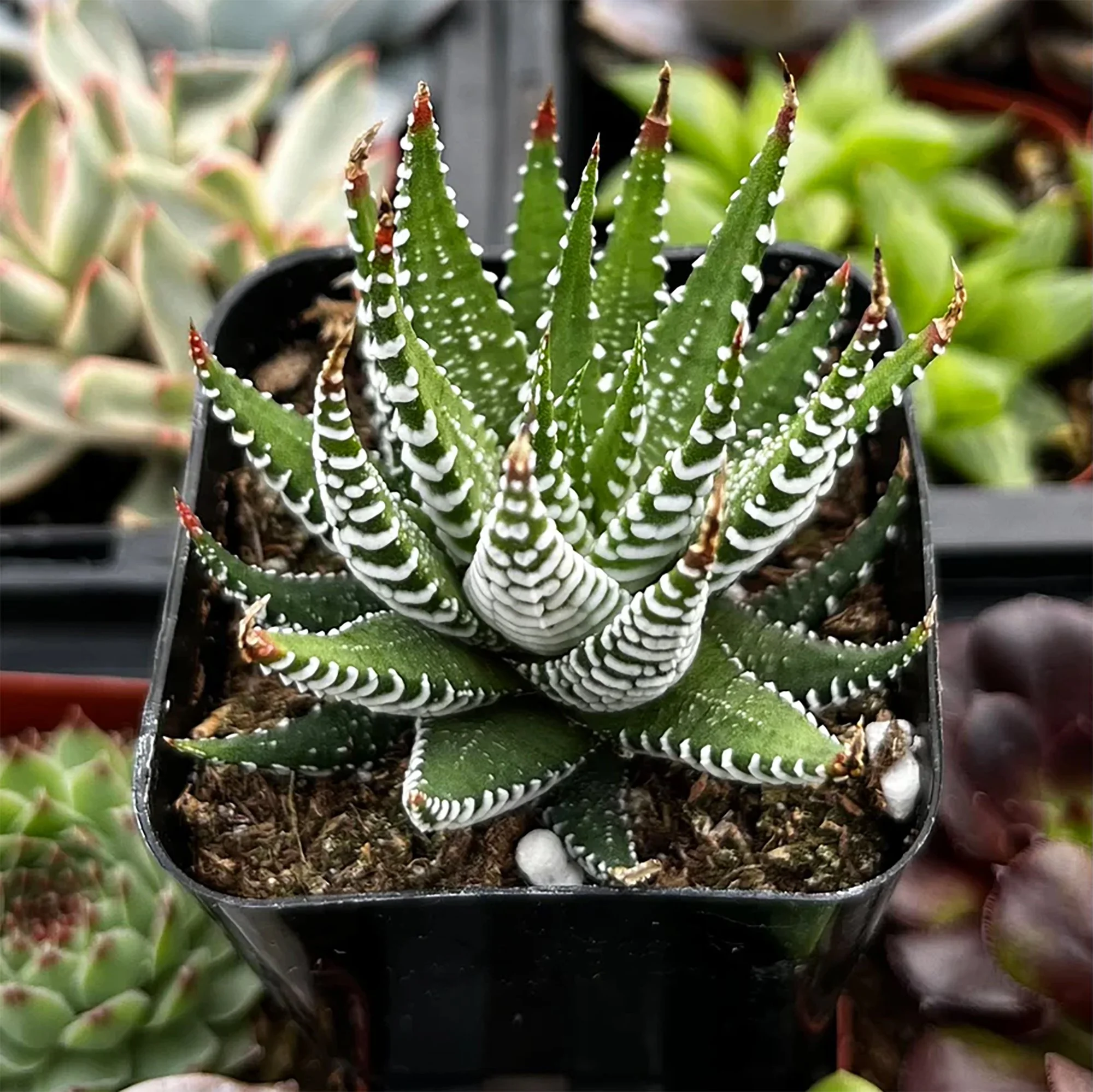
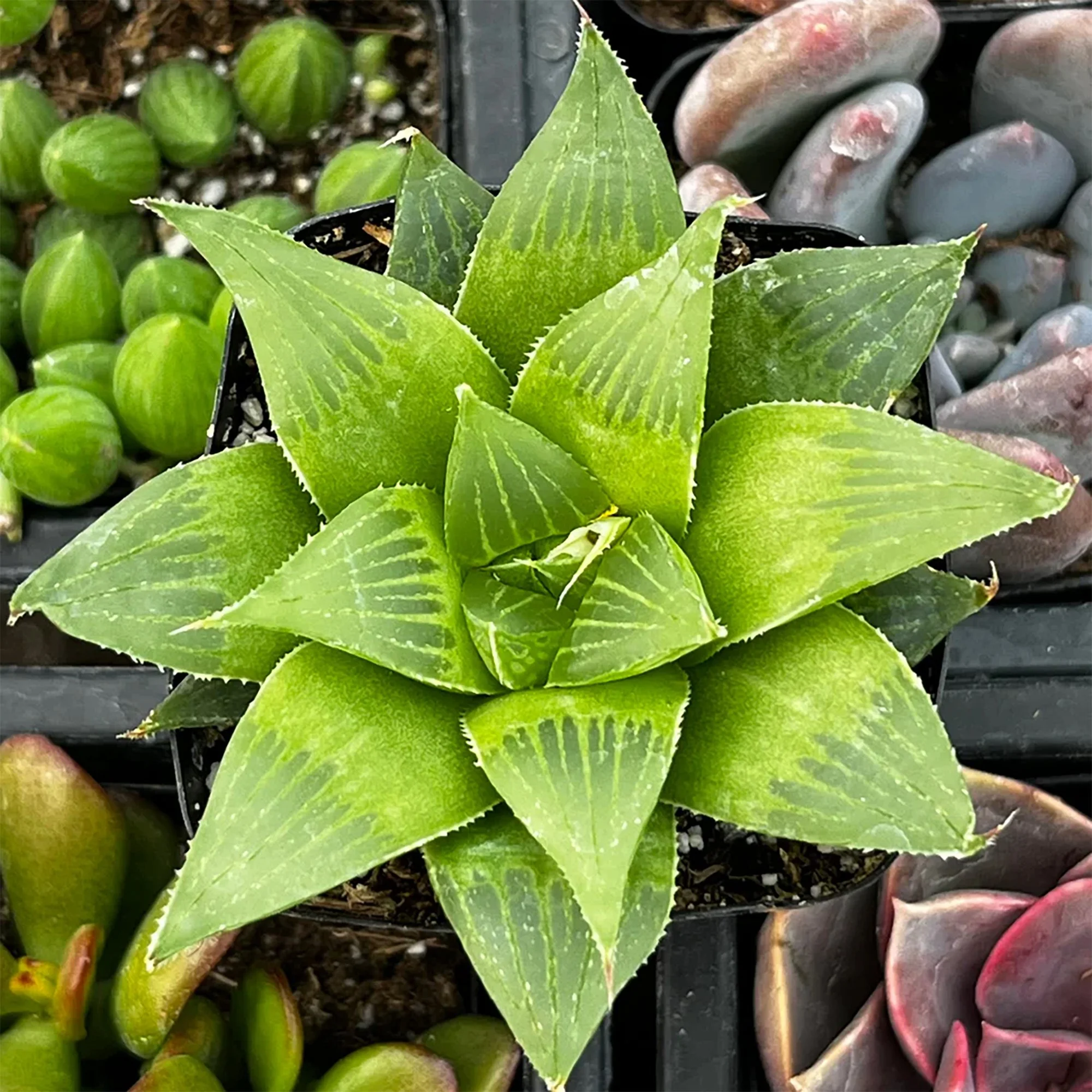
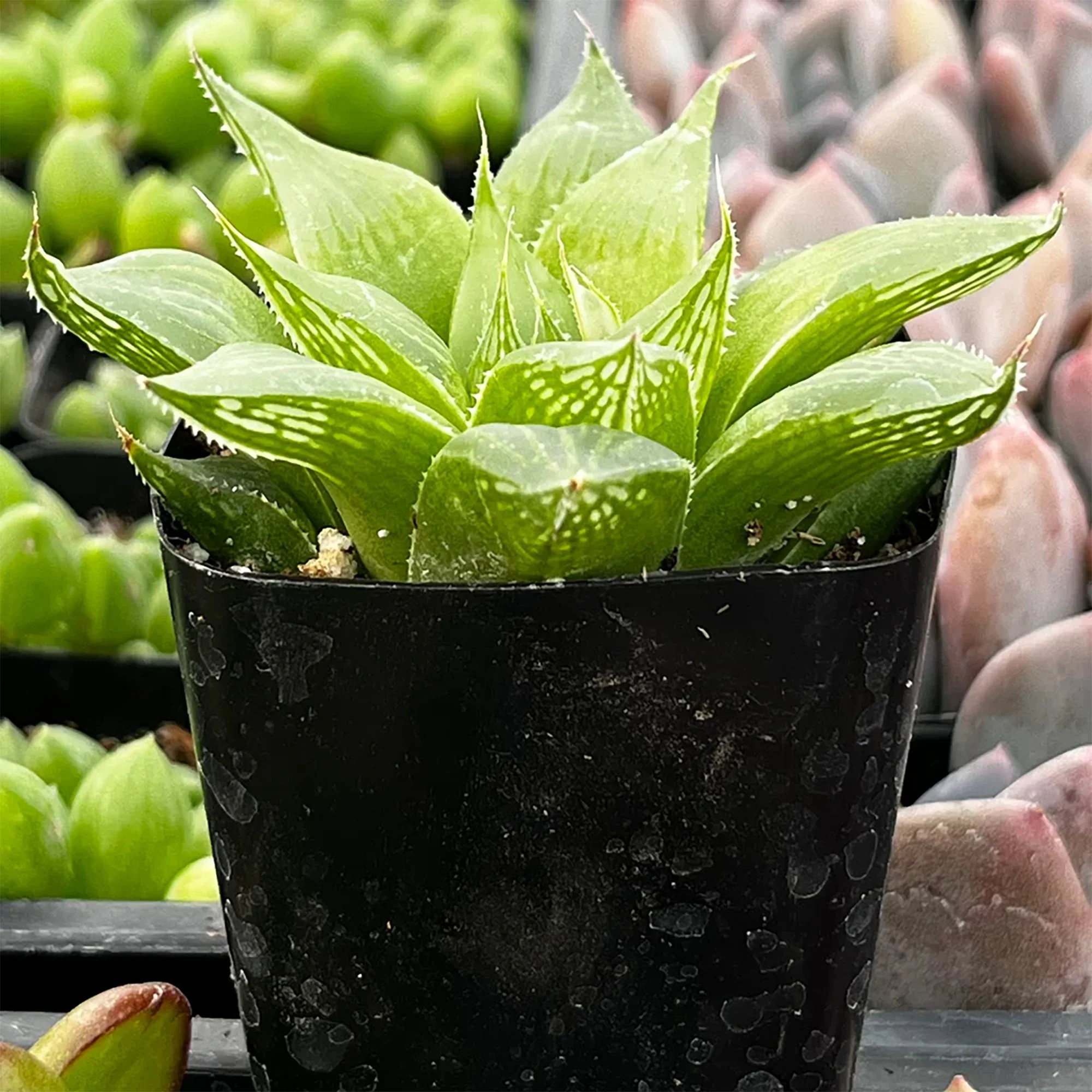
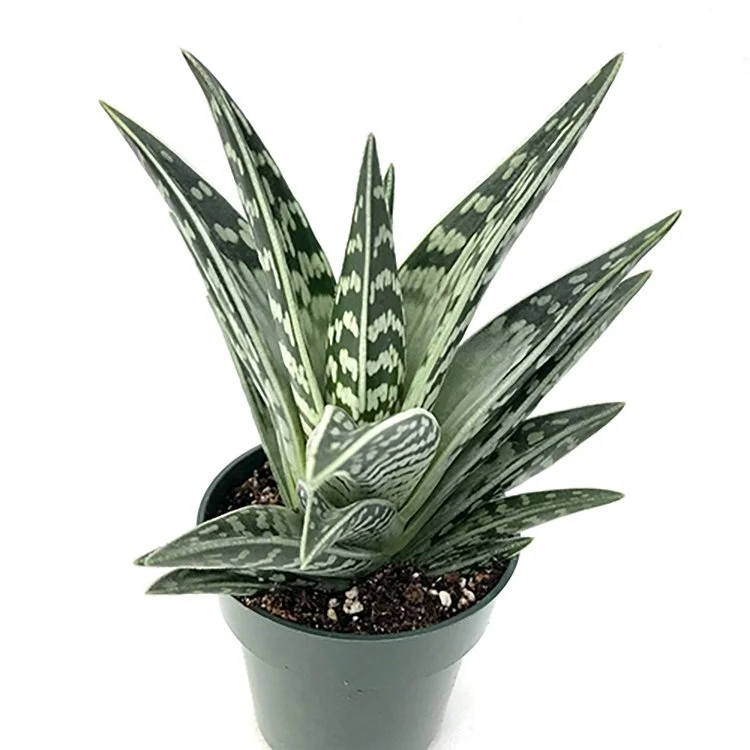
Alоe variegata is a small, striking succulent native to South Africa. It is prized for its compact rosettes of dark green leaves adorned with creamy-white stripes and irregular patterns, giving it a tiger-like appearance. Slow-growing and easy to care for, this aloe is perfect for small containers, rock gardens, and succulent collections. Mature plants typically reach 3–5 inches tall and 4–6 inches wide.
Care and Cultivation:
Prefers bright light to partial sun
Water sparingly; allow soil to dry completely between waterings
Use a fast-draining cactus or succulent soil mix
Ideal for containers, rock gardens, and indoor displays
Frost Tolerance and Cold Hardiness:
Best suited for USDA Zones 9–11
Not frost-tolerant; protect from temperatures below 32°F (0°C)
Ideal growing temperatures: 60–85°F (16–29°C)
Winter Dormancy and Health:
Growth slows during cooler months
Reduce watering significantly in winter
Maintain bright light to prevent etiolation
Notes:
Compact, patterned leaves create striking visual interest
Low-maintenance and beginner-friendly
Excellent for small containers and succulent arrangements
Slow-growing and long-lived
Botanical Name: Aloe variegata
Common Names: Tiger Aloe, Partridge Breast Aloe
Alоe variegata is a small, striking succulent native to South Africa. It is prized for its compact rosettes of dark green leaves adorned with creamy-white stripes and irregular patterns, giving it a tiger-like appearance. Slow-growing and easy to care for, this aloe is perfect for small containers, rock gardens, and succulent collections. Mature plants typically reach 3–5 inches tall and 4–6 inches wide.
Care and Cultivation:
Prefers bright light to partial sun
Water sparingly; allow soil to dry completely between waterings
Use a fast-draining cactus or succulent soil mix
Ideal for containers, rock gardens, and indoor displays
Frost Tolerance and Cold Hardiness:
Best suited for USDA Zones 9–11
Not frost-tolerant; protect from temperatures below 32°F (0°C)
Ideal growing temperatures: 60–85°F (16–29°C)
Winter Dormancy and Health:
Growth slows during cooler months
Reduce watering significantly in winter
Maintain bright light to prevent etiolation
Notes:
Compact, patterned leaves create striking visual interest
Low-maintenance and beginner-friendly
Excellent for small containers and succulent arrangements
Slow-growing and long-lived