 Image 1 of 2
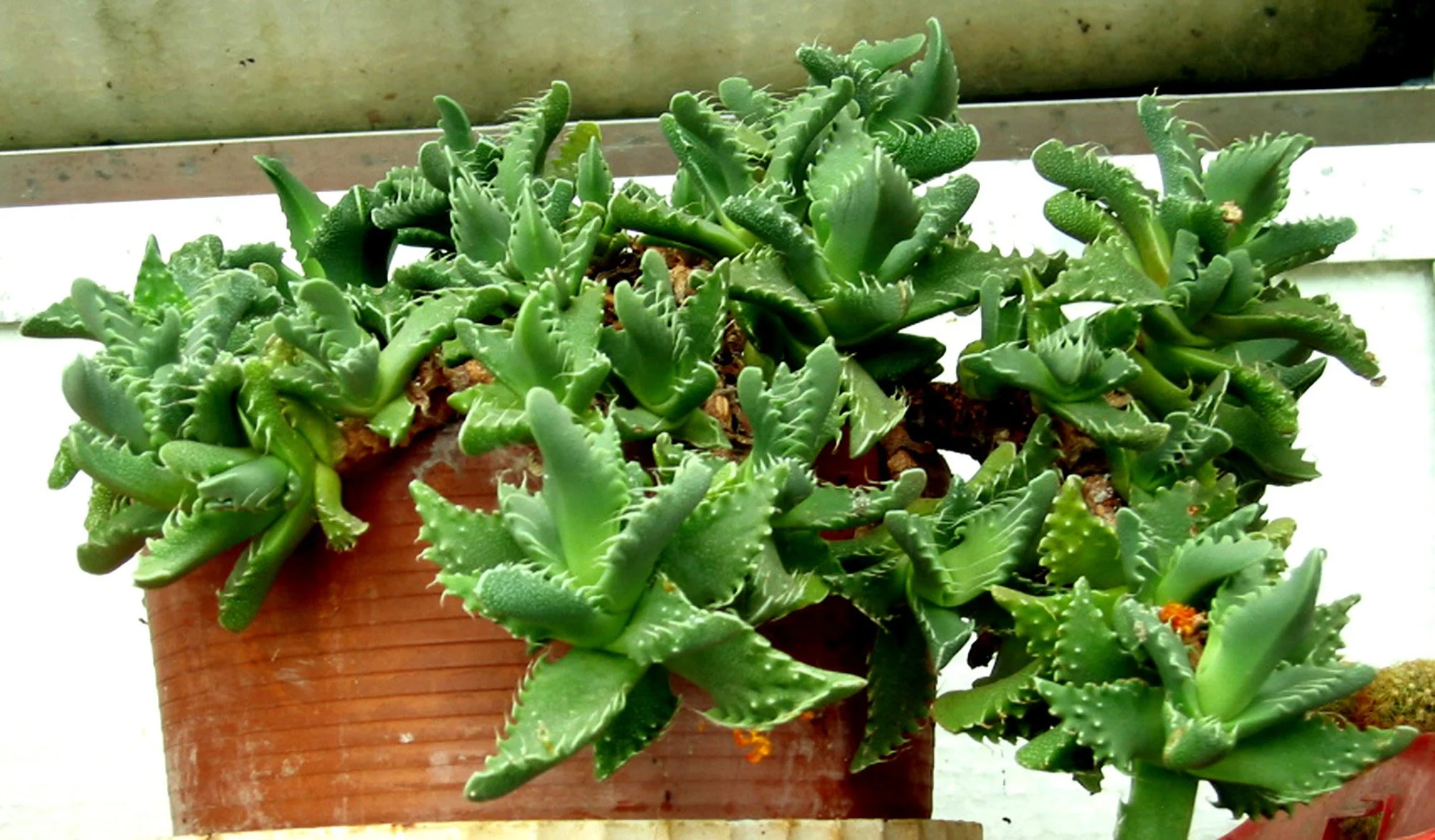 Image 2 of 2
Botanical Name: Faucaria tigrina
Common Names: Tiger Jaws, Wolf’s Mouth
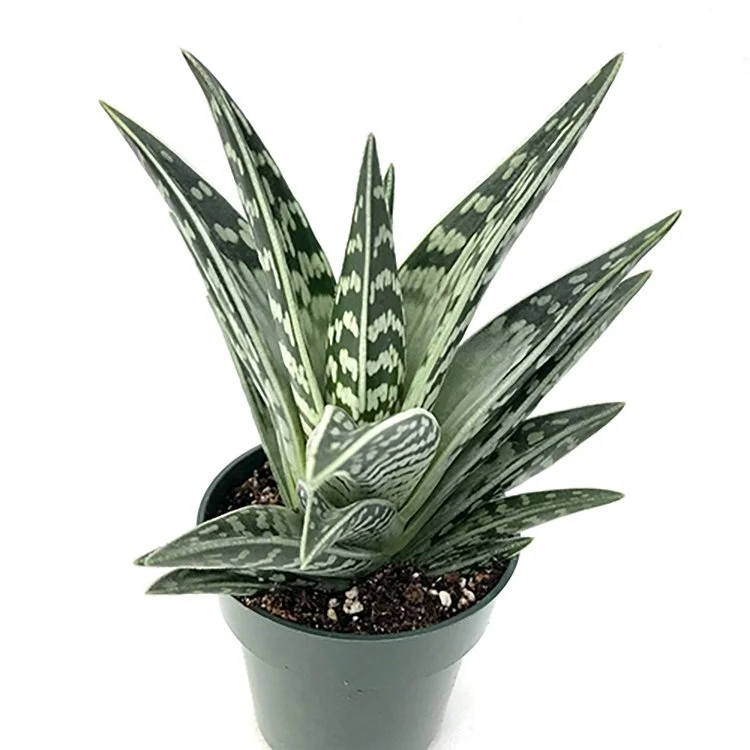
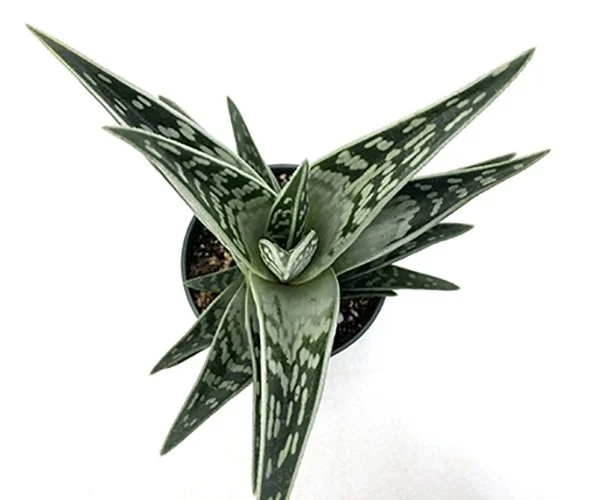
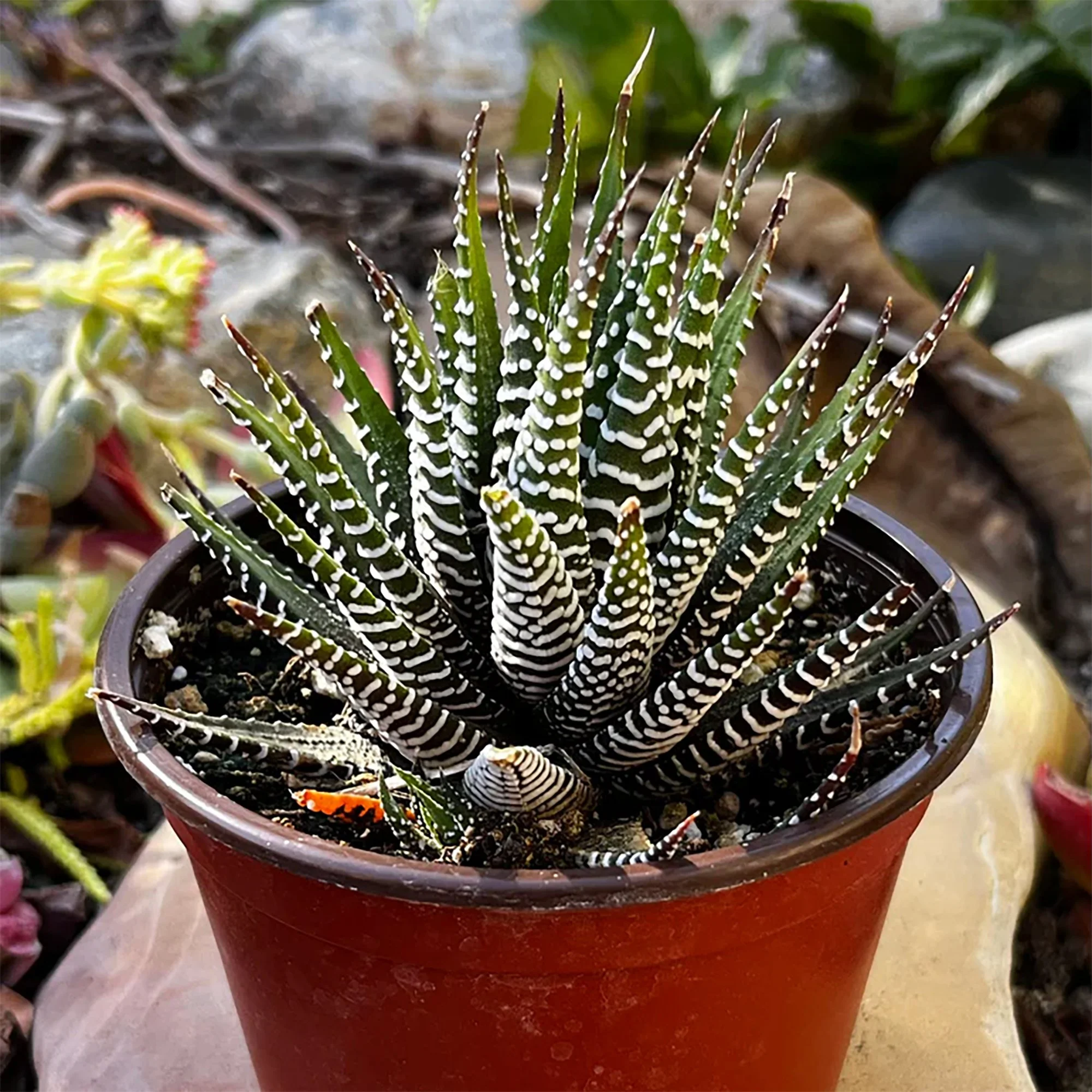
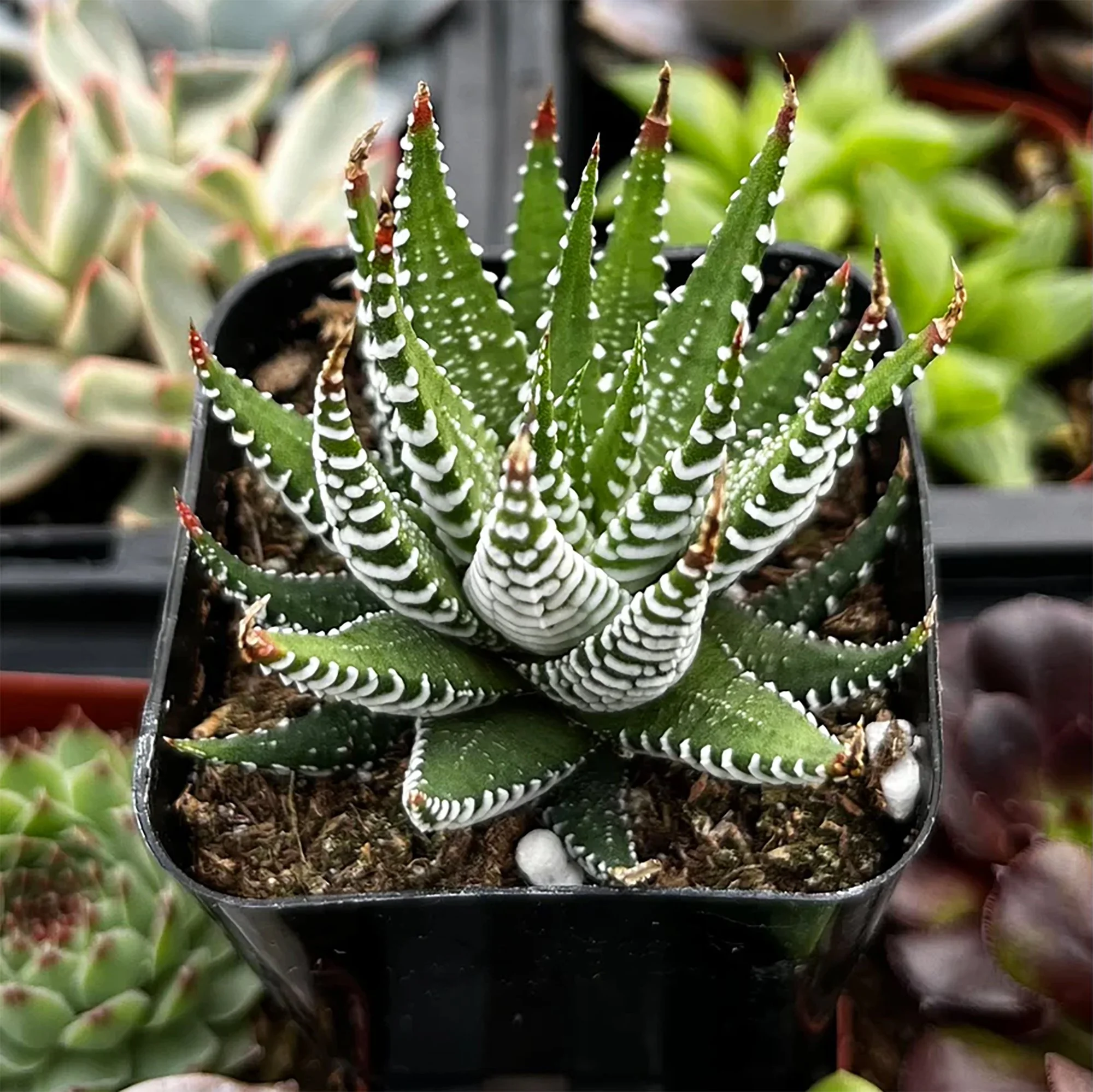
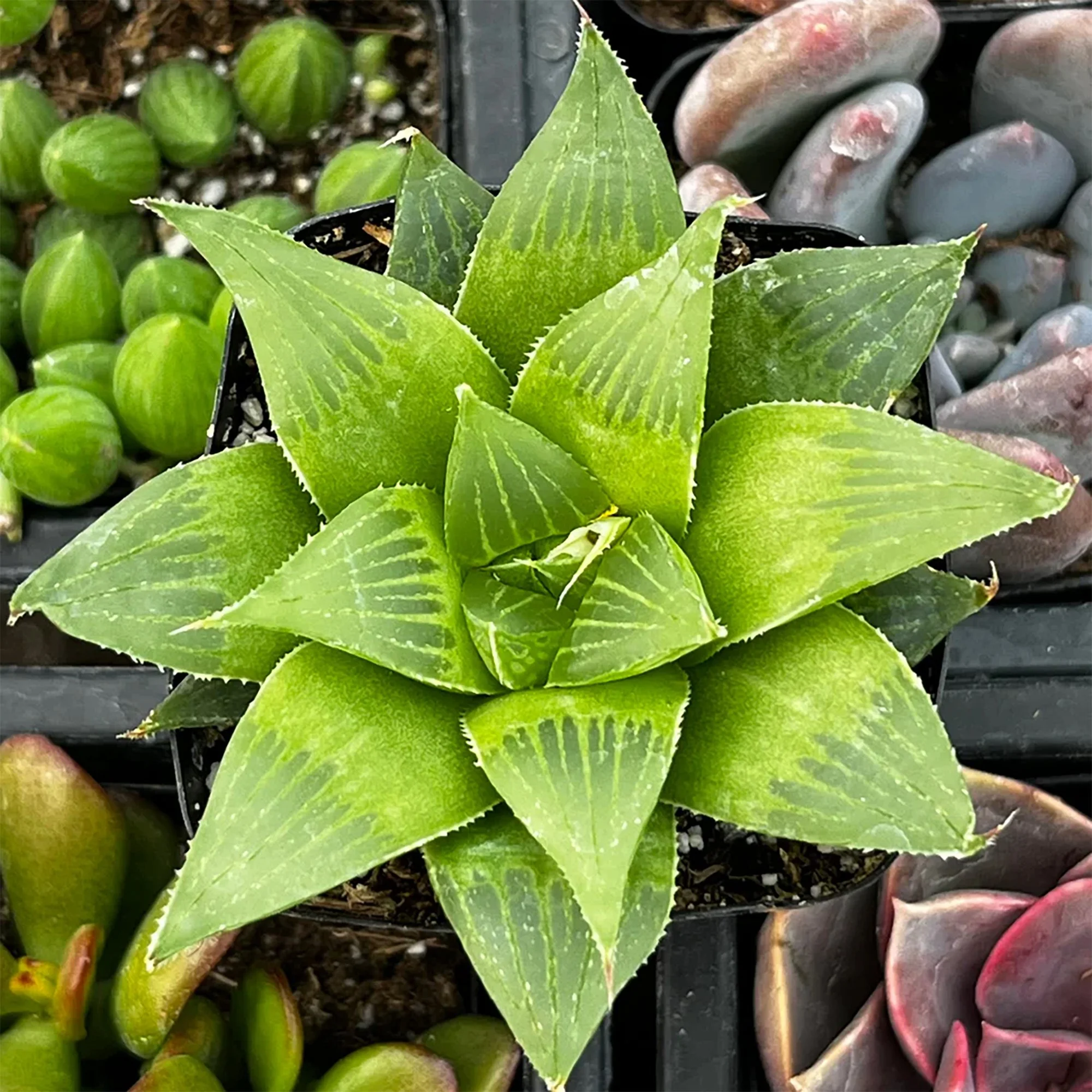
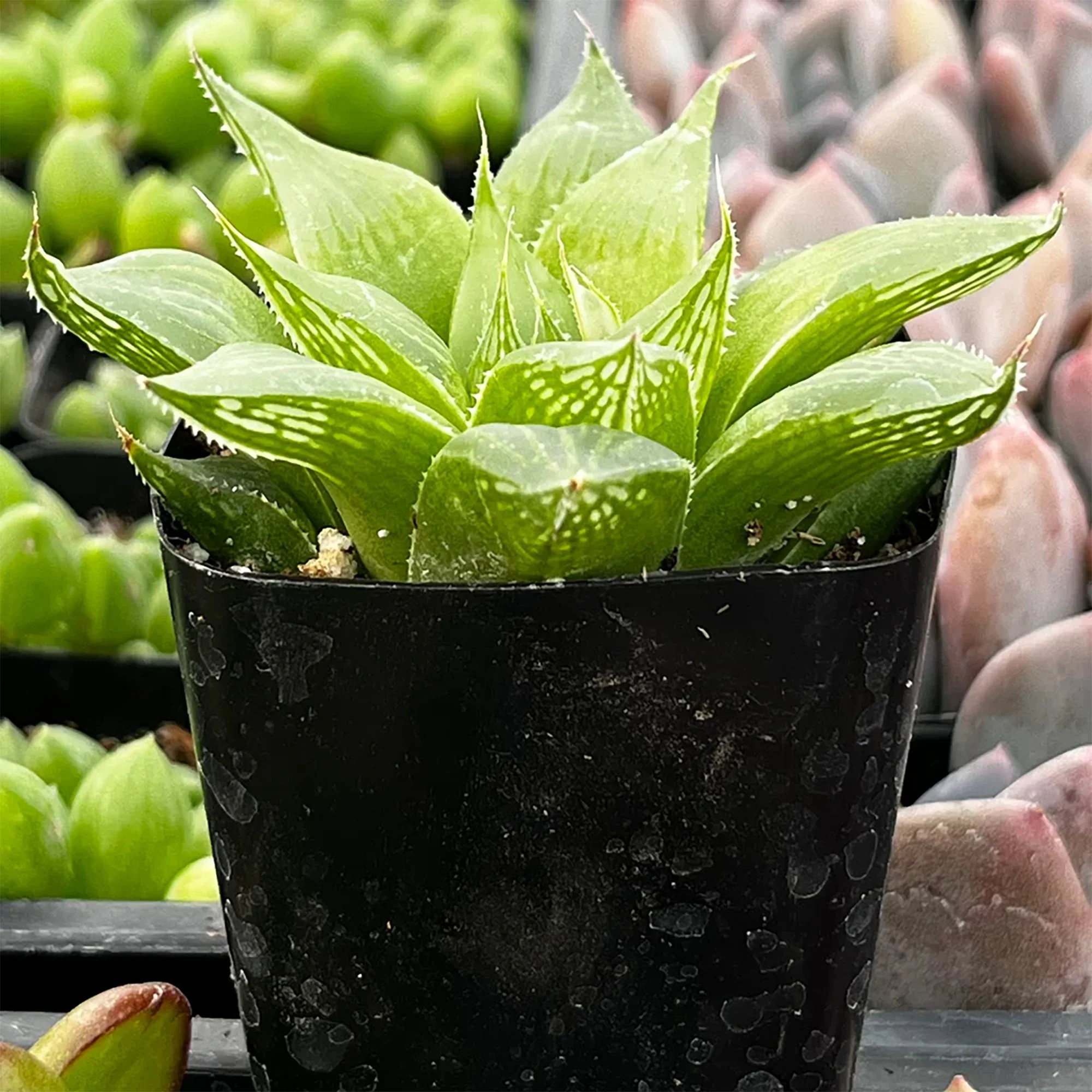
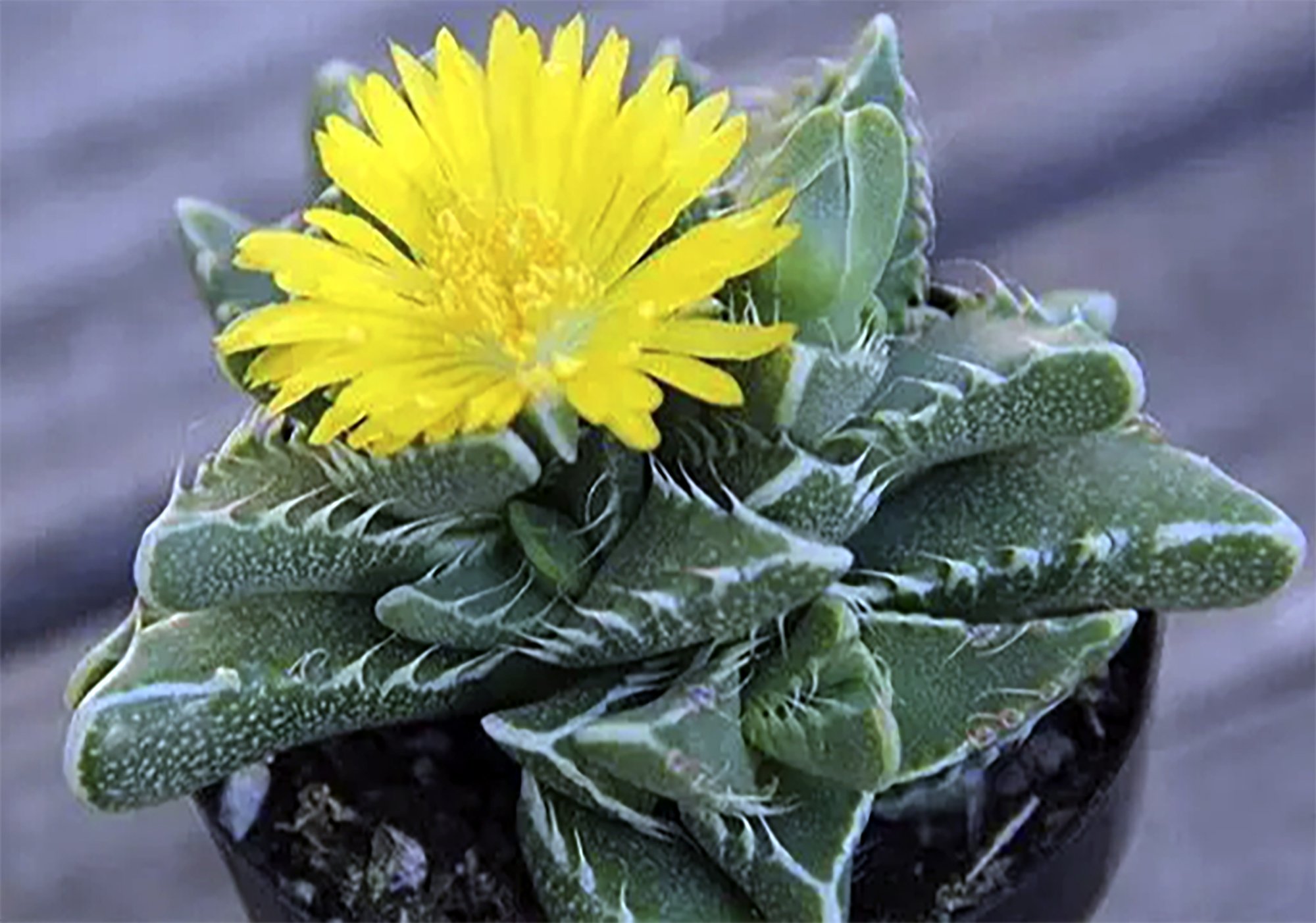
Faucaria tigrina is a compact, clumping succulent native to South Africa, prized for its thick, triangular green leaves lined with soft, tooth-like margins that resemble a tiger’s jaws. Despite their fierce appearance, the leaf “teeth” are not sharp. This low-growing species forms tight rosettes and produces bright yellow, daisy-like flowers in fall and winter under good light. Mature plants typically reach 3–5 inches tall and 4–6 inches wide.
Care and Cultivation:
Prefers bright light to full sun
Water sparingly; allow soil to dry between waterings
Use a fast-draining cactus or succulent soil mix
Ideal for small containers, rock gardens, and succulent collections
Frost Tolerance and Cold Hardiness:
Best suited for USDA Zones 9–11
Not frost-tolerant; protect from temperatures below 32°F (0°C)
Ideal growing temperatures: 60–85°F (16–29°C)
Winter Dormancy and Health:
Active growth often occurs in cooler months
Water lightly during fall and winter growth periods
Reduce watering in summer dormancy
Maintain bright light year-round
Notes:
Soft “teeth” are ornamental, not sharp
Produces showy yellow flowers in fall to winter
Compact, clumping habit
Excellent choice for small pots and windowsills
Botanical Name: Faucaria tigrina
Common Names: Tiger Jaws, Wolf’s Mouth
Faucaria tigrina is a compact, clumping succulent native to South Africa, prized for its thick, triangular green leaves lined with soft, tooth-like margins that resemble a tiger’s jaws. Despite their fierce appearance, the leaf “teeth” are not sharp. This low-growing species forms tight rosettes and produces bright yellow, daisy-like flowers in fall and winter under good light. Mature plants typically reach 3–5 inches tall and 4–6 inches wide.
Care and Cultivation:
Prefers bright light to full sun
Water sparingly; allow soil to dry between waterings
Use a fast-draining cactus or succulent soil mix
Ideal for small containers, rock gardens, and succulent collections
Frost Tolerance and Cold Hardiness:
Best suited for USDA Zones 9–11
Not frost-tolerant; protect from temperatures below 32°F (0°C)
Ideal growing temperatures: 60–85°F (16–29°C)
Winter Dormancy and Health:
Active growth often occurs in cooler months
Water lightly during fall and winter growth periods
Reduce watering in summer dormancy
Maintain bright light year-round
Notes:
Soft “teeth” are ornamental, not sharp
Produces showy yellow flowers in fall to winter
Compact, clumping habit
Excellent choice for small pots and windowsills