
 Image 1 of 2
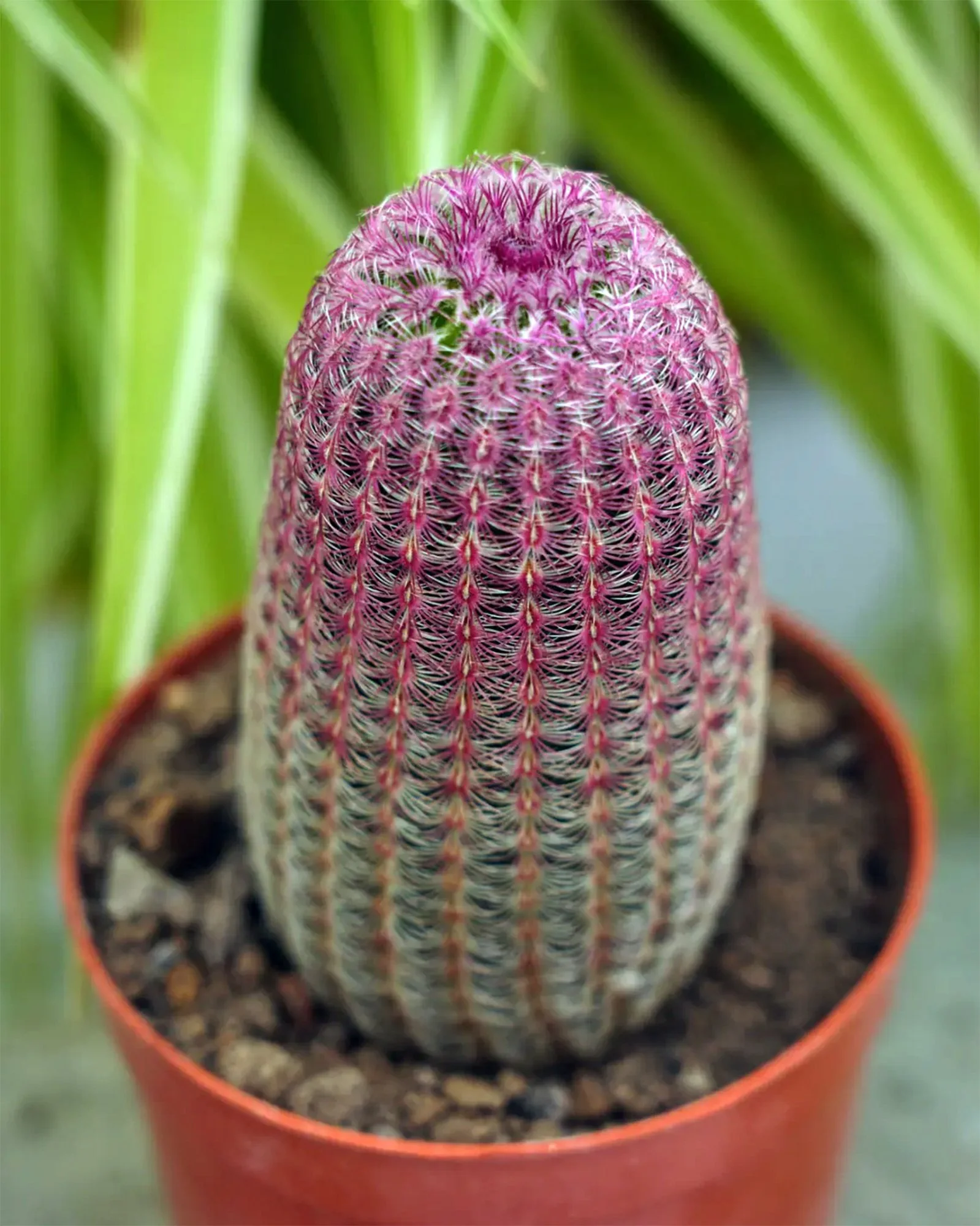 Image 2 of 2
Botanical Name: Echinocereus rigidissimus ‘Rubrispinus’
Common Names: Red-Spined Hedgehog Cactus, Red-Spined Echinocereus
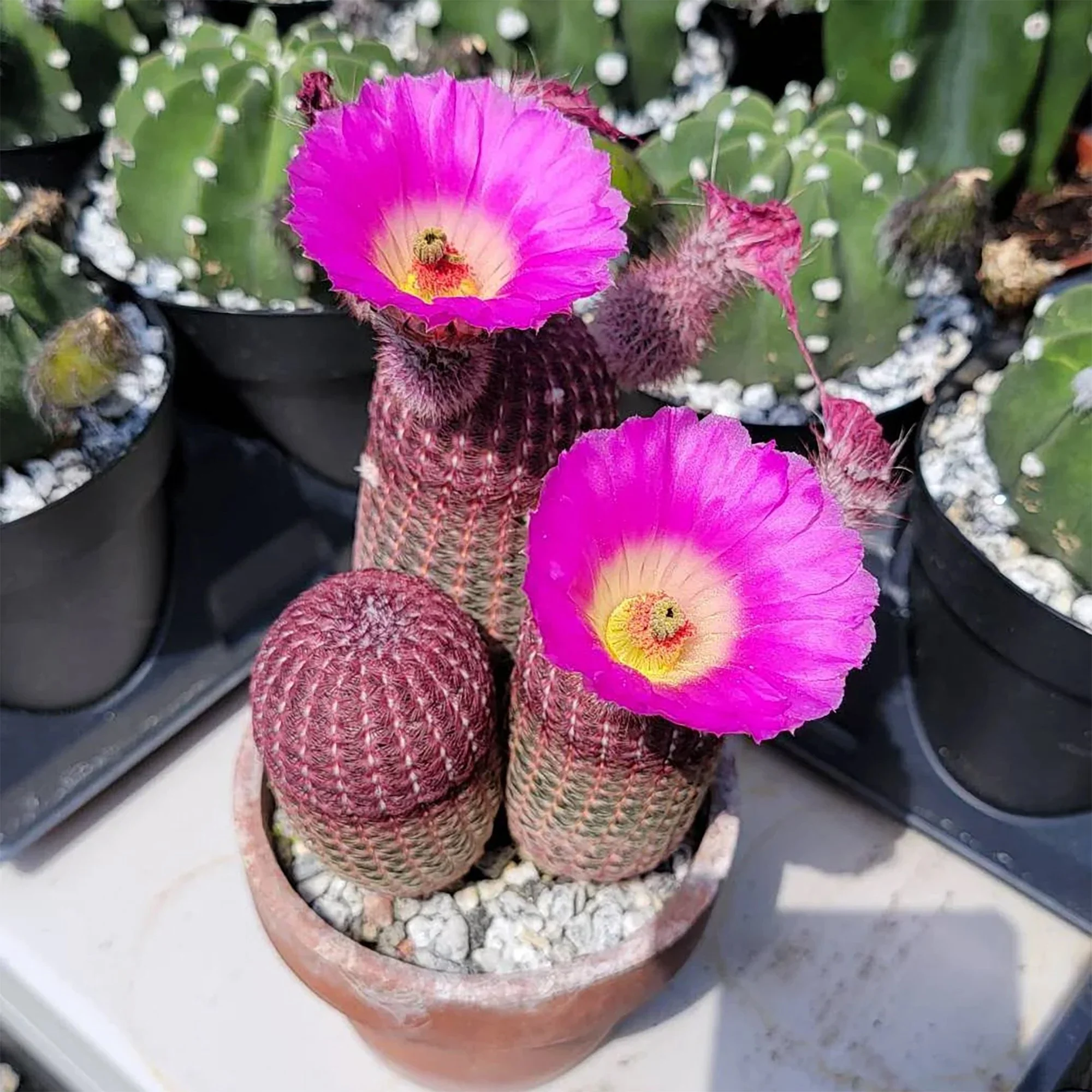
Echinocereus rigidissimus ‘Rubrispinus’ is a striking, small columnar cactus native to Arizona and northern Mexico. This species is instantly recognizable for its bright green, ribbed stems adorned with vivid red spines, which create dramatic contrast and a visually compelling texture. Its architectural form adds interest to succulent collections, desert landscapes, and xeriscape gardens. Slow-growing but highly ornamental, this cactus produces large, magenta spring flowers that emerge along the upper ribs, making it a standout addition for collectors and desert enthusiasts alike. Mature plants typically reach 12–18 inches tall and 6–10 inches wide, forming compact, sculptural clusters over time.
Care and Cultivation:
Prefers full sun to bright light for optimal health and flowering
Water sparingly, allowing soil to dry completely between waterings
Use a fast-draining cactus or succulent soil mix to prevent root rot
Ideal for containers, rock gardens, and xeriscape landscapes
Ideal growing temperatures: 50–90°F (10–32°C)
Low-maintenance and beginner-friendly
Frost Tolerance and Cold Hardiness:
Best suited for USDA Zones 7–10
Cold hardy to about 15°F (-9°C) when soil is dry
Protect from prolonged freezing and excess winter moisture
Winter Dormancy and Health:
Growth slows during cooler months
Reduce watering significantly during dormancy
Maintain bright light and good airflow to prevent stretching or rot
Notes:
Vivid red spines create striking visual contrast
Produces large, magenta spring flowers for a dramatic display
Compact, architectural growth habit makes it a sculptural addition
Excellent for small containers, rock gardens, or desert-inspired landscapes
Beginner-friendly and highly ornamental, perfect for collectors and enthusiasts
Botanical Name: Echinocereus rigidissimus ‘Rubrispinus’
Common Names: Red-Spined Hedgehog Cactus, Red-Spined Echinocereus
Echinocereus rigidissimus ‘Rubrispinus’ is a striking, small columnar cactus native to Arizona and northern Mexico. This species is instantly recognizable for its bright green, ribbed stems adorned with vivid red spines, which create dramatic contrast and a visually compelling texture. Its architectural form adds interest to succulent collections, desert landscapes, and xeriscape gardens. Slow-growing but highly ornamental, this cactus produces large, magenta spring flowers that emerge along the upper ribs, making it a standout addition for collectors and desert enthusiasts alike. Mature plants typically reach 12–18 inches tall and 6–10 inches wide, forming compact, sculptural clusters over time.
Care and Cultivation:
Prefers full sun to bright light for optimal health and flowering
Water sparingly, allowing soil to dry completely between waterings
Use a fast-draining cactus or succulent soil mix to prevent root rot
Ideal for containers, rock gardens, and xeriscape landscapes
Ideal growing temperatures: 50–90°F (10–32°C)
Low-maintenance and beginner-friendly
Frost Tolerance and Cold Hardiness:
Best suited for USDA Zones 7–10
Cold hardy to about 15°F (-9°C) when soil is dry
Protect from prolonged freezing and excess winter moisture
Winter Dormancy and Health:
Growth slows during cooler months
Reduce watering significantly during dormancy
Maintain bright light and good airflow to prevent stretching or rot
Notes:
Vivid red spines create striking visual contrast
Produces large, magenta spring flowers for a dramatic display
Compact, architectural growth habit makes it a sculptural addition
Excellent for small containers, rock gardens, or desert-inspired landscapes
Beginner-friendly and highly ornamental, perfect for collectors and enthusiasts