 Image 1 of 3
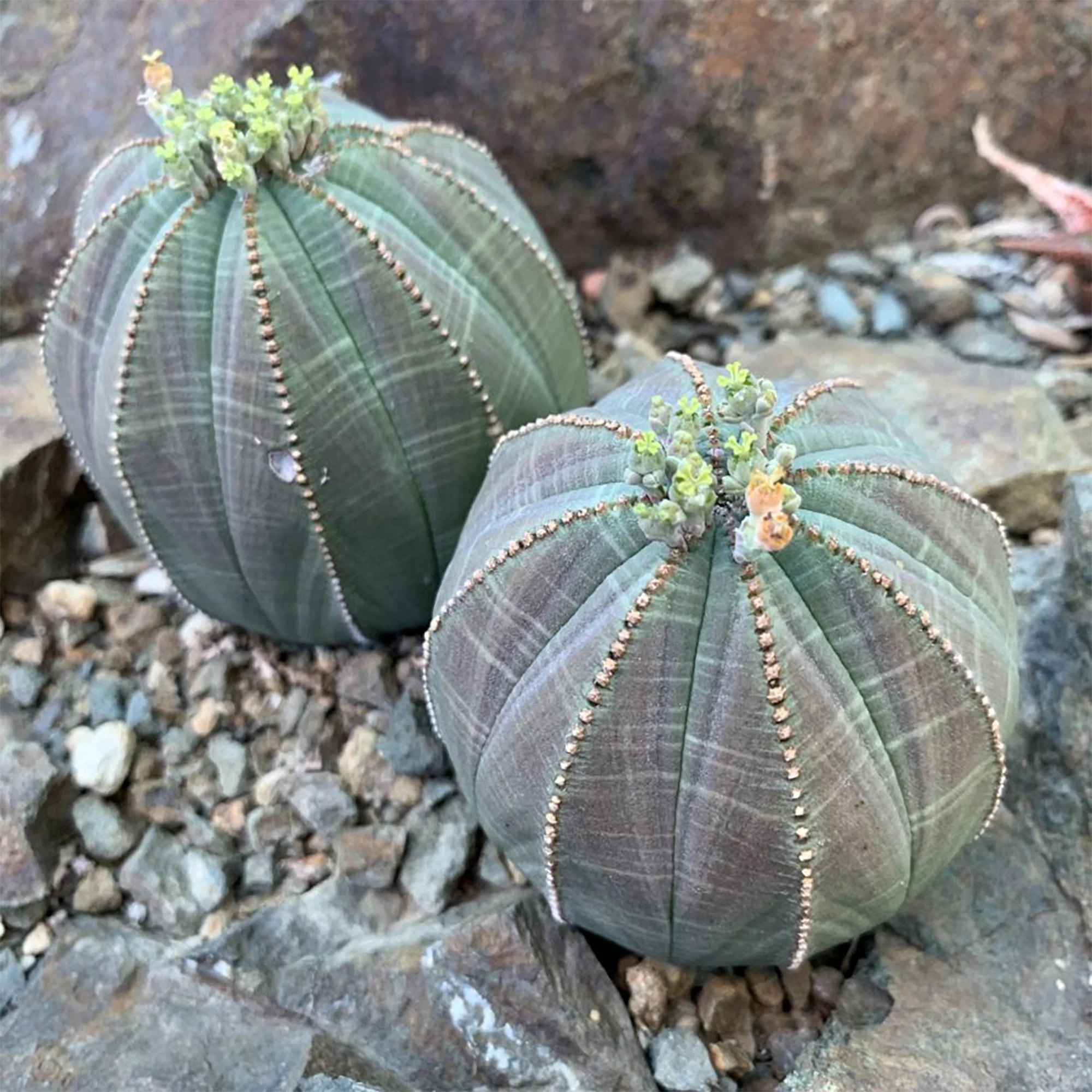 Image 2 of 3
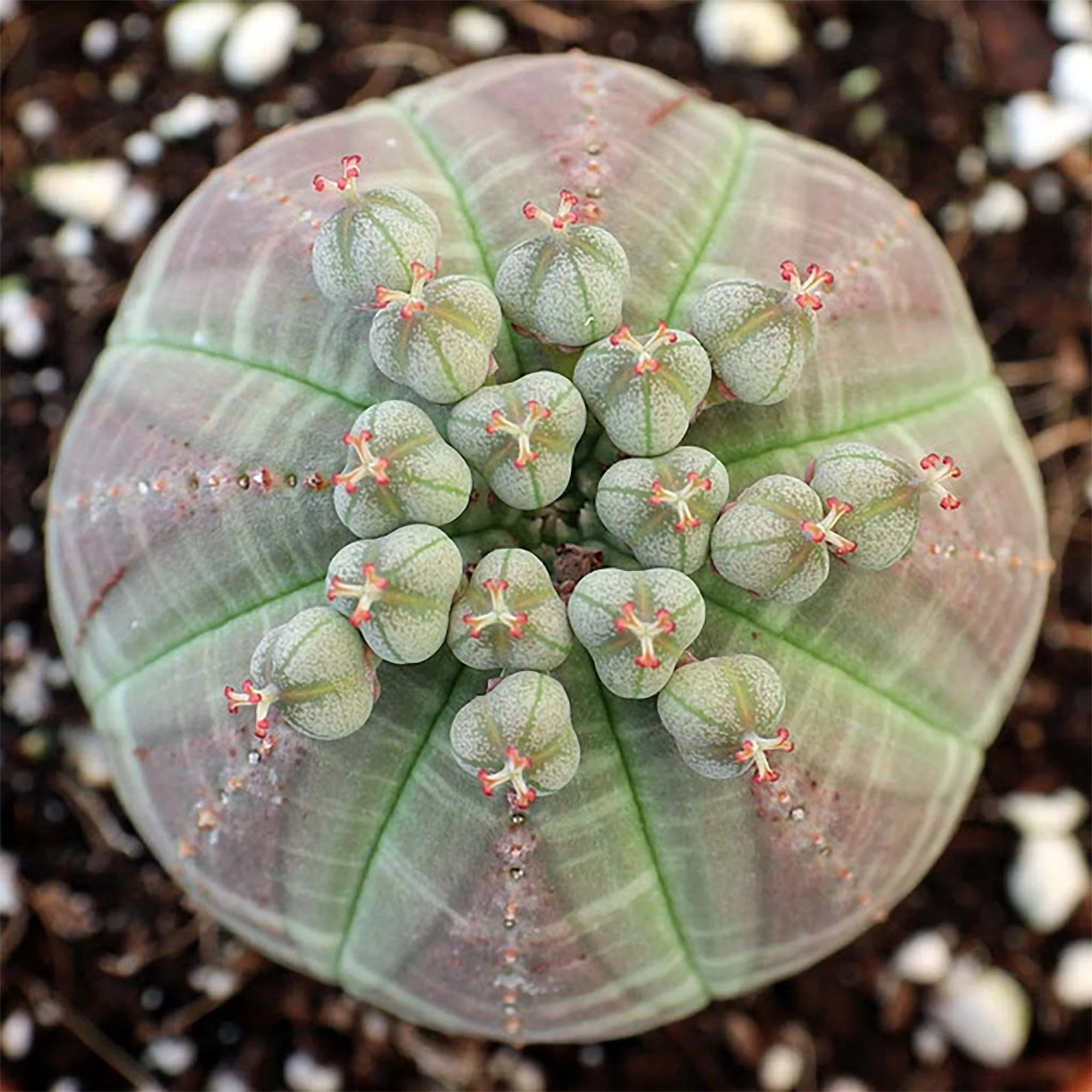 Image 3 of 3
Botanical Name: Euphorbia obesa
Common Names: Baseball Plant, Sea Urchin Plant
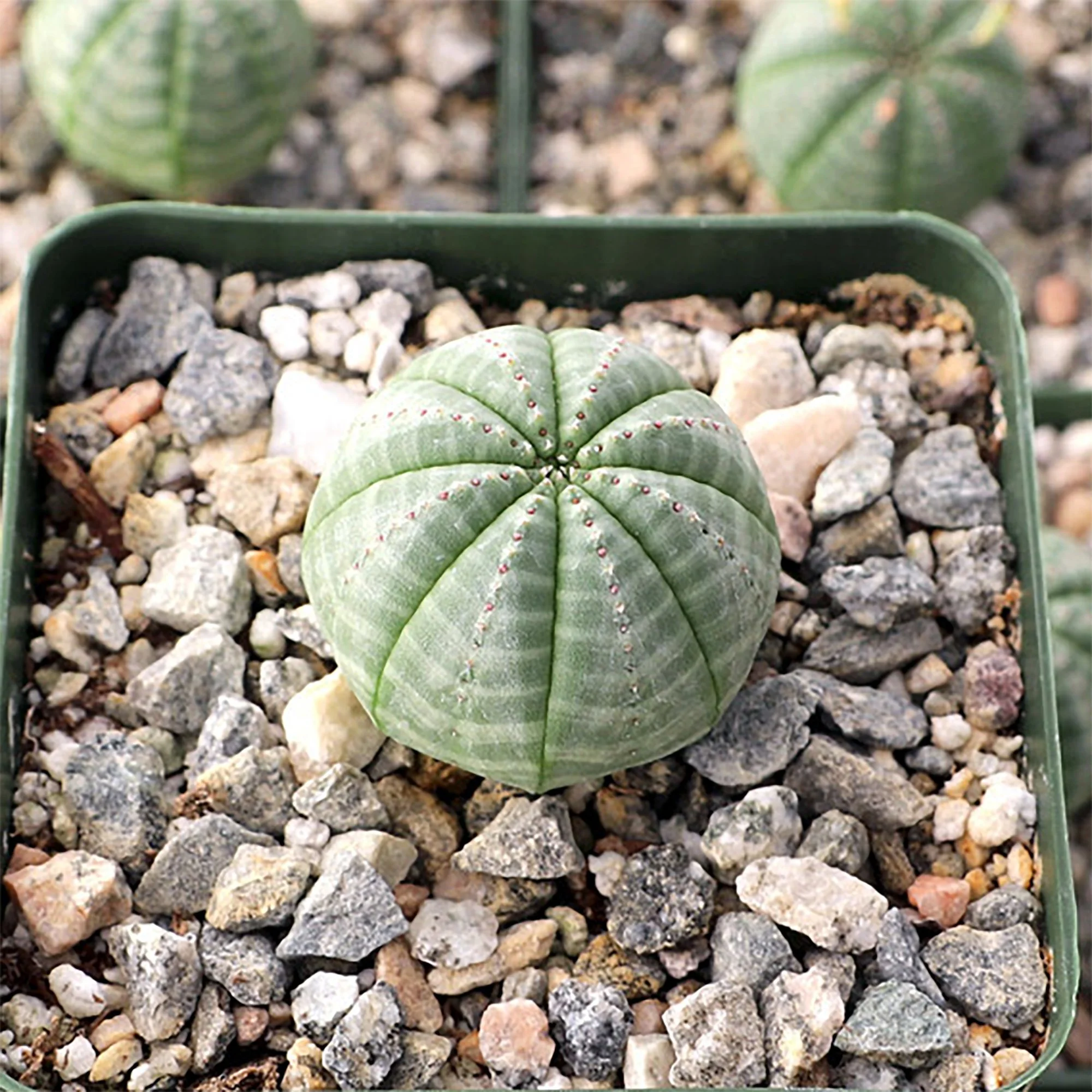
Euphorbia obesa is a rare, slow-growing succulent native to the Great Karoo region of South Africa. It is instantly recognizable for its nearly spherical, spineless body, accented with vertical ribs and subtle geometric patterns. When young, plants resemble small baseballs, gradually becoming slightly more columnar as they age. Highly prized by succulent collectors for its distinctive form, Euphorbia obesa is ideal for small containers, succulent arrangements, or protected displays where its unique shape can be admired. Mature plants typically reach 6–8 inches tall and 4–6 inches wide, making them compact yet visually striking.
Care and Cultivation:
Prefers bright light to full sun; protect from intense midday sun when young
Water sparingly, allowing soil to dry completely between waterings
Use a very fast-draining cactus or succulent soil mix to prevent root rot
Best grown in containers for precise moisture control
Ideal growing temperatures: 65–90°F (18–32°C)
Low-maintenance and perfect for succulent collections
Frost Tolerance and Cold Hardiness:
Best suited for USDA Zones 10–11
Not frost-tolerant; protect from temperatures below 40°F (4°C)
Winter Dormancy and Health:
Growth slows significantly during winter months
Reduce watering to near-dry levels during dormancy
Maintain bright light and good airflow to prevent rot
Notes:
Spineless, geometric form makes it visually striking and highly collectible
Extremely slow-growing and long-lived, rewarding patient growers
Dioecious: male and female plants are separate
Handle with care; sap is toxic if damaged
Botanical Name: Euphorbia obesa
Common Names: Baseball Plant, Sea Urchin Plant
Euphorbia obesa is a rare, slow-growing succulent native to the Great Karoo region of South Africa. It is instantly recognizable for its nearly spherical, spineless body, accented with vertical ribs and subtle geometric patterns. When young, plants resemble small baseballs, gradually becoming slightly more columnar as they age. Highly prized by succulent collectors for its distinctive form, Euphorbia obesa is ideal for small containers, succulent arrangements, or protected displays where its unique shape can be admired. Mature plants typically reach 6–8 inches tall and 4–6 inches wide, making them compact yet visually striking.
Care and Cultivation:
Prefers bright light to full sun; protect from intense midday sun when young
Water sparingly, allowing soil to dry completely between waterings
Use a very fast-draining cactus or succulent soil mix to prevent root rot
Best grown in containers for precise moisture control
Ideal growing temperatures: 65–90°F (18–32°C)
Low-maintenance and perfect for succulent collections
Frost Tolerance and Cold Hardiness:
Best suited for USDA Zones 10–11
Not frost-tolerant; protect from temperatures below 40°F (4°C)
Winter Dormancy and Health:
Growth slows significantly during winter months
Reduce watering to near-dry levels during dormancy
Maintain bright light and good airflow to prevent rot
Notes:
Spineless, geometric form makes it visually striking and highly collectible
Extremely slow-growing and long-lived, rewarding patient growers
Dioecious: male and female plants are separate
Handle with care; sap is toxic if damaged