 Image 1 of 2
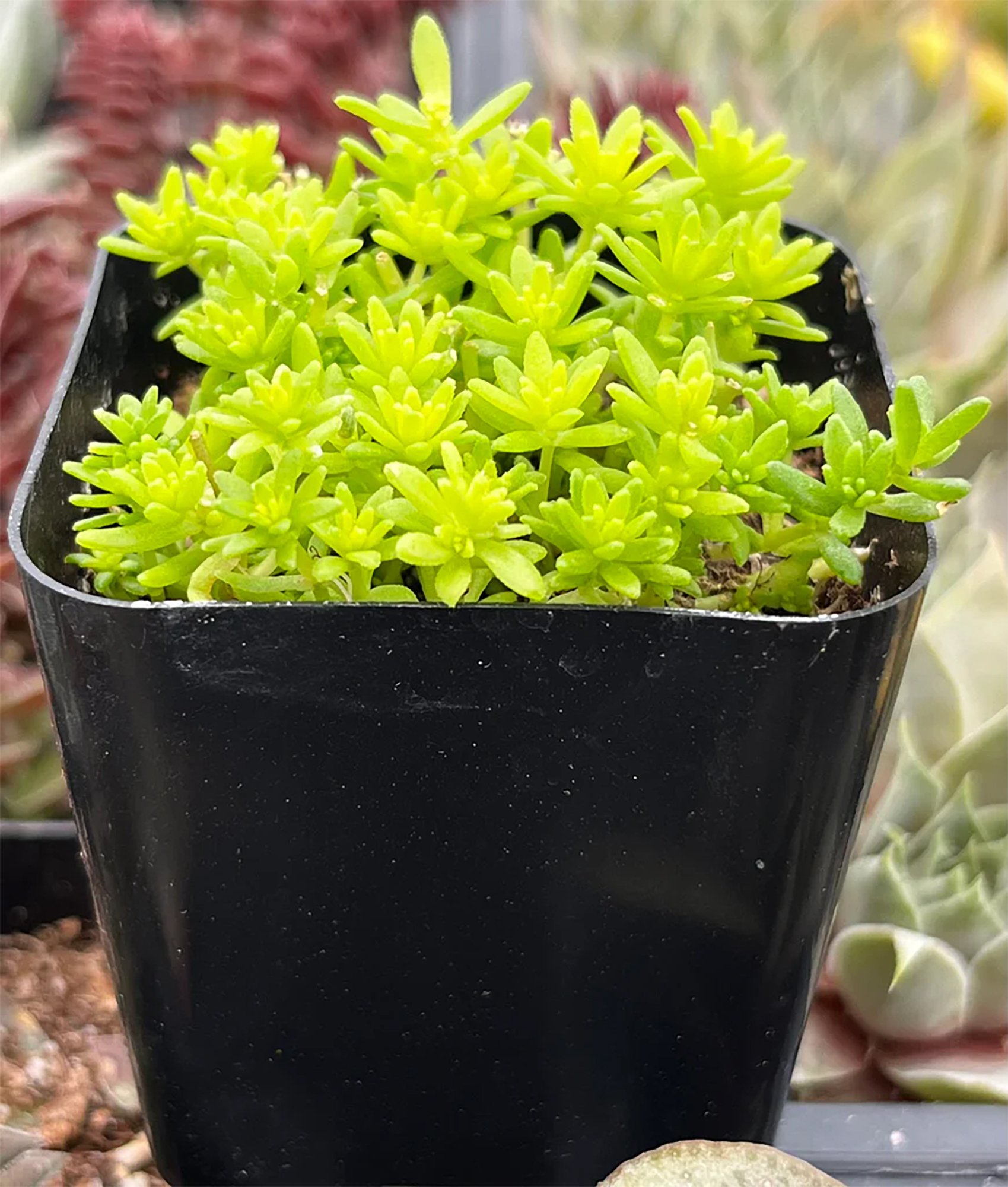 Image 2 of 2
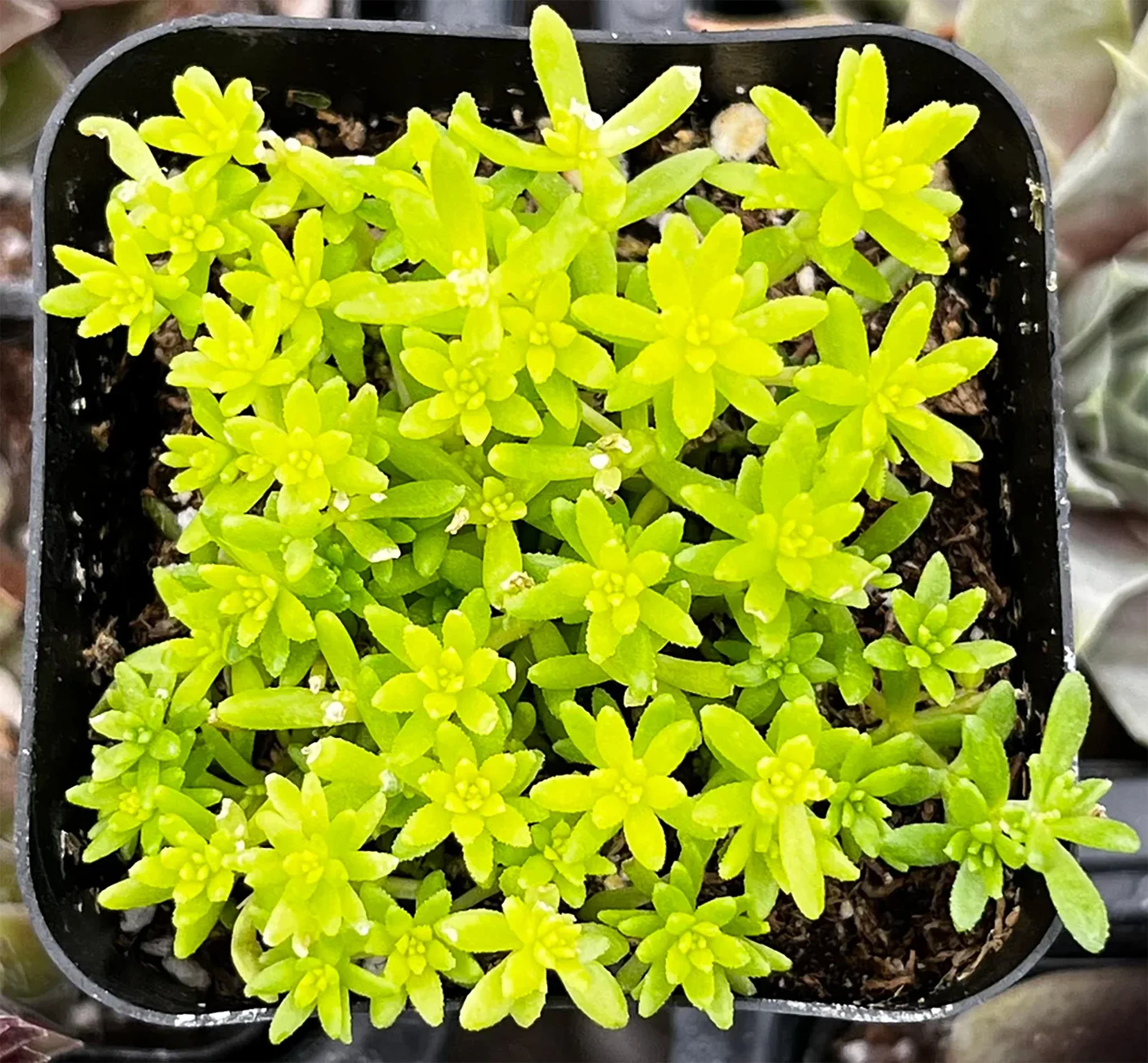
Botanical Name: Sedum ‘Tokyo Sun’
Common Name: Tokyo Sun Sedum
Sedum ‘Tokyo Sun’ is a vibrant, low-growing succulent known for its bright chartreuse to golden-yellow foliage. Native to East Asia through its parent species, this fast-growing sedum forms dense mats and trailing stems that spread readily. Color is most intense in full sun and warm conditions. At maturity, plants typically reach 2–4 inches tall and can spread 12–24 inches wide, making them ideal for ground cover, hanging baskets, mixed containers, and rock gardens.
Care and Cultivation:
Prefers full sun to bright light
Water moderately; allow soil to dry slightly between waterings
Use a well-draining succulent soil mix
Ideal for ground cover, containers, and hanging baskets
Frost Tolerance and Cold Hardiness:
Best suited for USDA Zones 7–11
Cold hardy to about 0°F (-18°C)
Dies back in winter in colder climates and returns in spring
Winter Dormancy and Health:
Enters dormancy in cold weather
Reduce watering in winter
Trim back dead growth in early spring
Notes:
Excellent for erosion control and mass plantings
Very easy to grow and fast spreading
Botanical Name: Sedum ‘Tokyo Sun’
Common Name: Tokyo Sun Sedum
Sedum ‘Tokyo Sun’ is a vibrant, low-growing succulent known for its bright chartreuse to golden-yellow foliage. Native to East Asia through its parent species, this fast-growing sedum forms dense mats and trailing stems that spread readily. Color is most intense in full sun and warm conditions. At maturity, plants typically reach 2–4 inches tall and can spread 12–24 inches wide, making them ideal for ground cover, hanging baskets, mixed containers, and rock gardens.
Care and Cultivation:
Prefers full sun to bright light
Water moderately; allow soil to dry slightly between waterings
Use a well-draining succulent soil mix
Ideal for ground cover, containers, and hanging baskets
Frost Tolerance and Cold Hardiness:
Best suited for USDA Zones 7–11
Cold hardy to about 0°F (-18°C)
Dies back in winter in colder climates and returns in spring
Winter Dormancy and Health:
Enters dormancy in cold weather
Reduce watering in winter
Trim back dead growth in early spring
Notes:
Excellent for erosion control and mass plantings
Very easy to grow and fast spreading