 Image 1 of 2
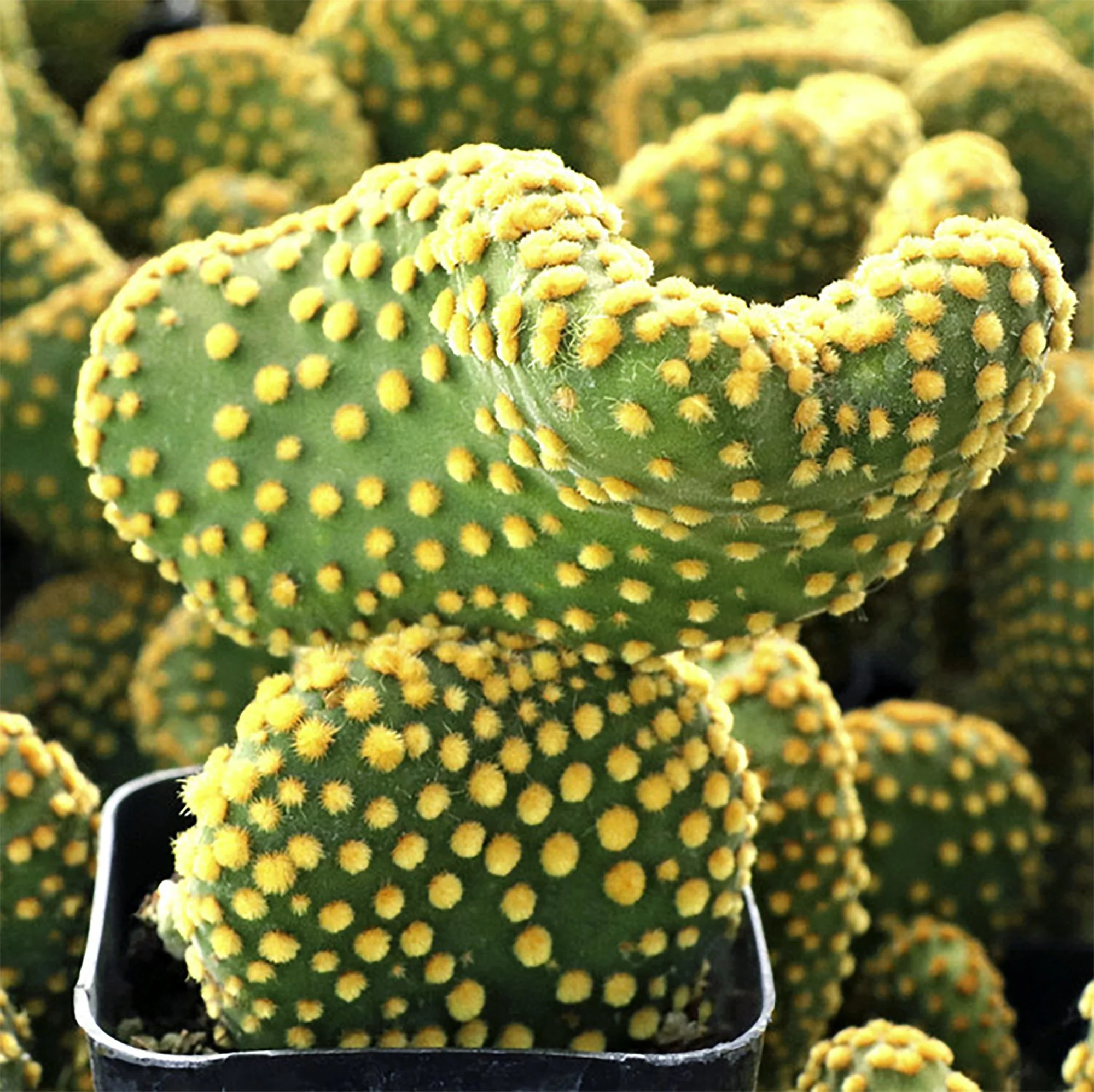 Image 2 of 2
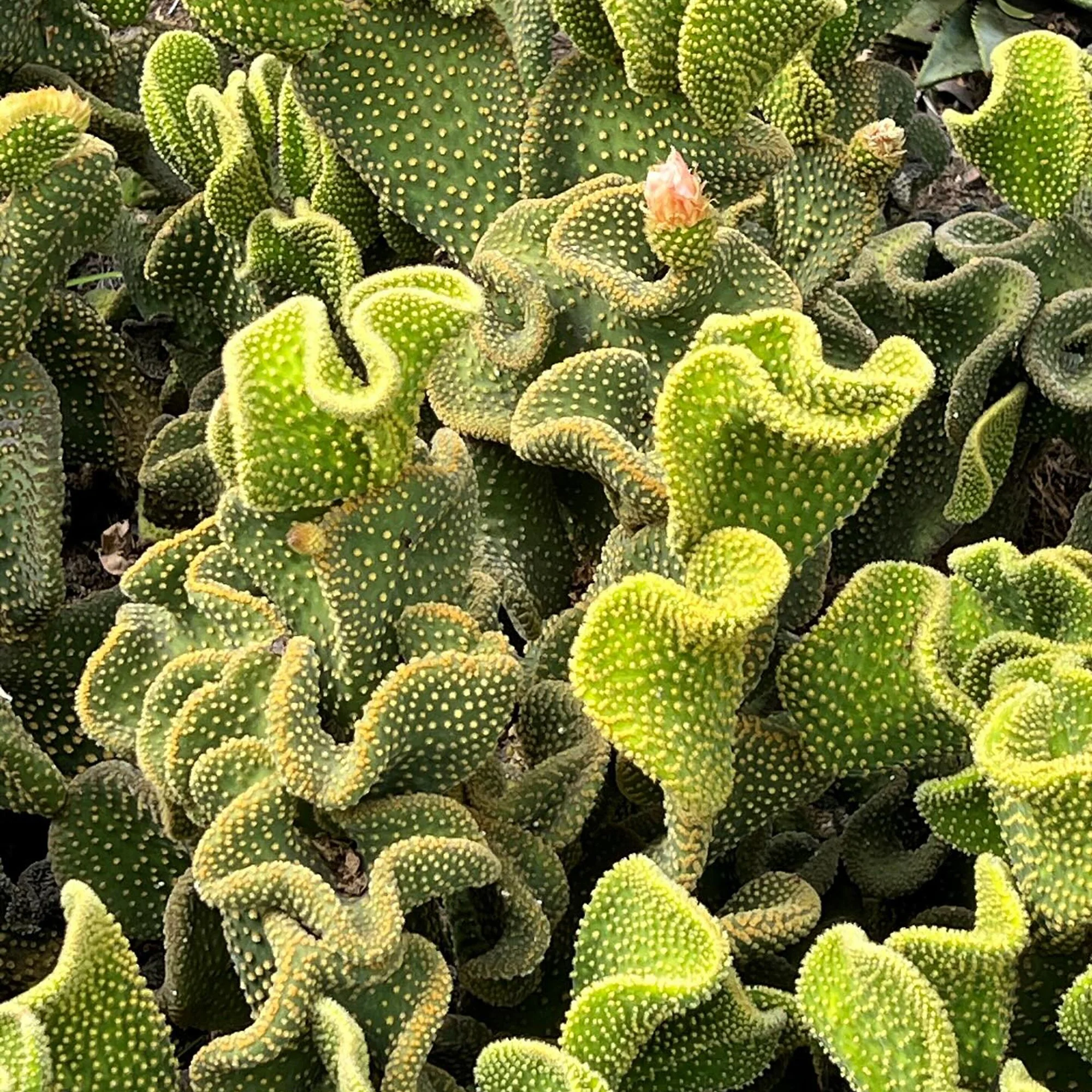
Botanical Name: Opuntia microdasys f. monstrosa
Common Name: Crazy Bunny Ears, Monstrose Bunny Ears
Opuntia microdasys f. montrosa is a visually striking cactus known for its dense, small paddle-shaped pads covered in tiny glochids, with a distinctive purple hue. Native to central Mexico, this variety adds a splash of color to gardens, containers, or xeriscape landscapes. Mature plants typically grow 2–3 feet tall and wide, forming a compact, bushy habit perfect for indoor or outdoor display in warm climates.
Care and Cultivation
Thrives in full sun to bright light
Water sparingly; allow soil to dry completely between waterings
Use a fast-draining cactus or succulent soil mix
Ideal for containers, rock gardens, or xeriscapes
Frost Tolerance and Cold Hardiness
Best suited for USDA Zones 9–11
Can tolerate brief frost down to around 28°F (-2°C)
Prolonged freezing temperatures may damage pads and growth tips
Protect or move indoors when severe cold is expected
Winter Dormancy and Health
Growth slows during winter dormancy
Reduce watering significantly in colder months
Slight wrinkling of pads is normal; mushy pads indicate overwatering
Note
Handle with care—pads have tiny glochids that can irritate skin
Botanical Name: Opuntia microdasys f. monstrosa
Common Name: Crazy Bunny Ears, Monstrose Bunny Ears
Opuntia microdasys f. montrosa is a visually striking cactus known for its dense, small paddle-shaped pads covered in tiny glochids, with a distinctive purple hue. Native to central Mexico, this variety adds a splash of color to gardens, containers, or xeriscape landscapes. Mature plants typically grow 2–3 feet tall and wide, forming a compact, bushy habit perfect for indoor or outdoor display in warm climates.
Care and Cultivation
Thrives in full sun to bright light
Water sparingly; allow soil to dry completely between waterings
Use a fast-draining cactus or succulent soil mix
Ideal for containers, rock gardens, or xeriscapes
Frost Tolerance and Cold Hardiness
Best suited for USDA Zones 9–11
Can tolerate brief frost down to around 28°F (-2°C)
Prolonged freezing temperatures may damage pads and growth tips
Protect or move indoors when severe cold is expected
Winter Dormancy and Health
Growth slows during winter dormancy
Reduce watering significantly in colder months
Slight wrinkling of pads is normal; mushy pads indicate overwatering
Note
Handle with care—pads have tiny glochids that can irritate skin