 Image 1 of 2
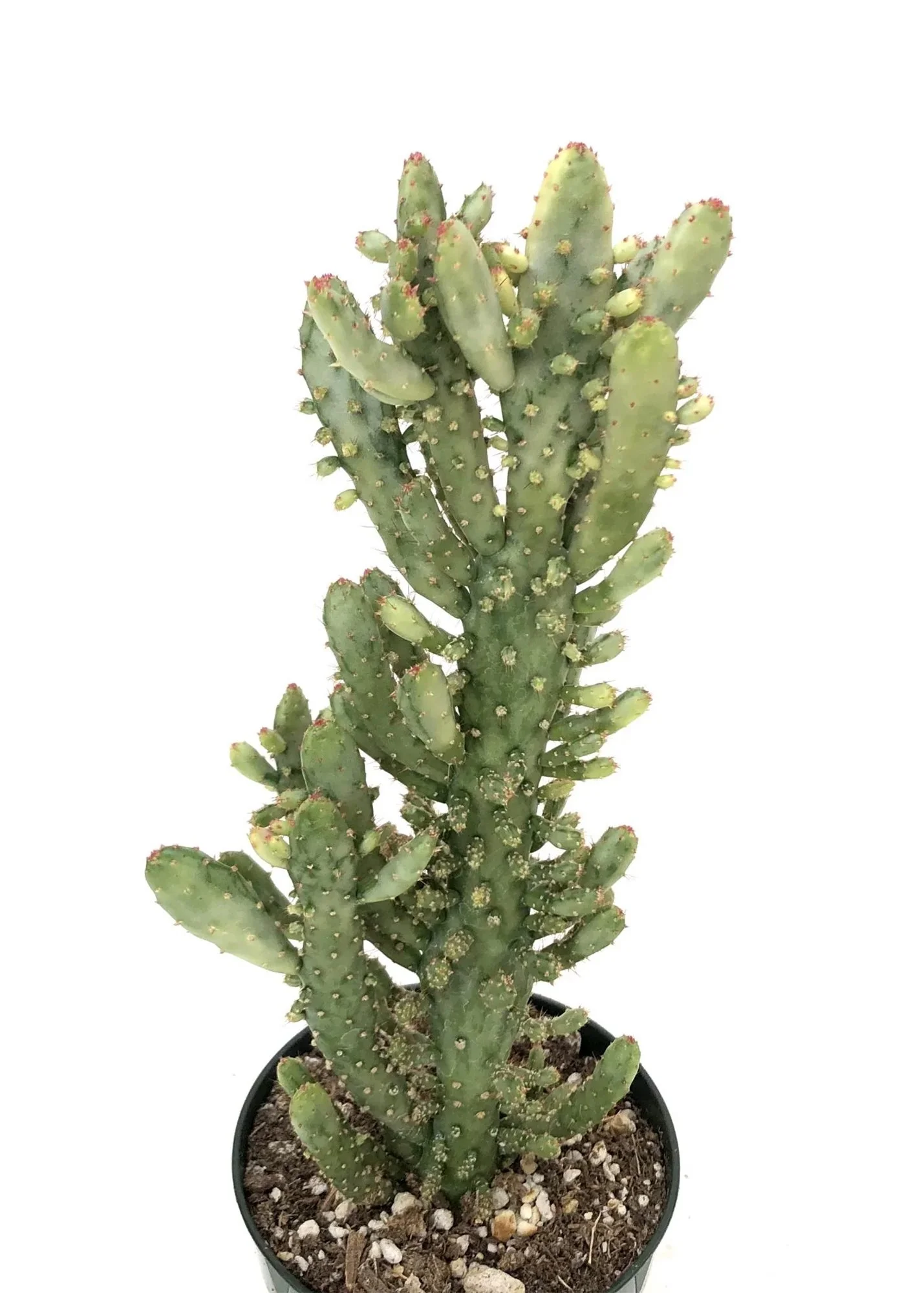 Image 2 of 2
Botanical Name: Opuntia monacantha variegata
Common Name: Variegated Joseph’s Coat, Variegated Prickly Pear
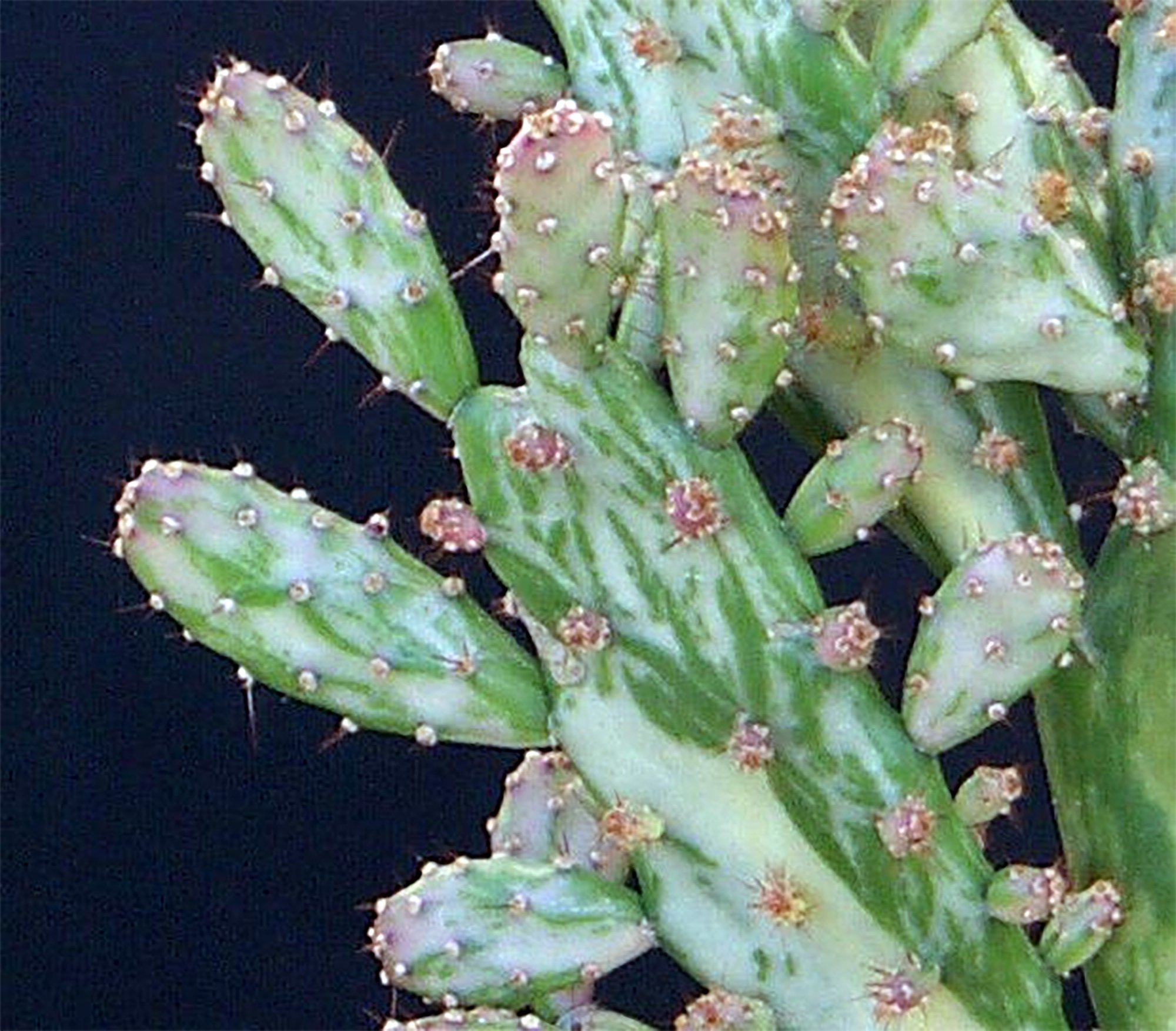
Opuntia monacantha variegata is a stunning cactus known for its paddle-shaped pads with striking variegation, blending green with creamy white or yellow patterns. Native to South America, this ornamental cactus adds vibrant color and unique texture to gardens, xeriscapes, or containers. Mature plants can grow 6–10 feet tall and spread widely, creating a bold, architectural presence.
Care and Cultivation:
Thrives in full sun
Water sparingly; allow soil to dry completely between waterings
Use a well-draining cactus or succulent soil mix
Ideal for gardens, containers, or rockeries
Frost Tolerance and Cold Hardiness:
Best suited for USDA Zones 9–11
Can tolerate brief frost down to around 28°F (-2°C)
Prolonged freezing temperatures may damage pads and growth tips
Protect or move indoors when severe cold is expected
Winter Dormancy and Health:
Growth slows during winter dormancy
Reduce watering significantly in cooler months
Pads may appear slightly wrinkled or dull in winter; this is normal and not a sign of poor health
Note: Handle with care—pads have small spines and glochids
Botanical Name: Opuntia monacantha variegata
Common Name: Variegated Joseph’s Coat, Variegated Prickly Pear
Opuntia monacantha variegata is a stunning cactus known for its paddle-shaped pads with striking variegation, blending green with creamy white or yellow patterns. Native to South America, this ornamental cactus adds vibrant color and unique texture to gardens, xeriscapes, or containers. Mature plants can grow 6–10 feet tall and spread widely, creating a bold, architectural presence.
Care and Cultivation:
Thrives in full sun
Water sparingly; allow soil to dry completely between waterings
Use a well-draining cactus or succulent soil mix
Ideal for gardens, containers, or rockeries
Frost Tolerance and Cold Hardiness:
Best suited for USDA Zones 9–11
Can tolerate brief frost down to around 28°F (-2°C)
Prolonged freezing temperatures may damage pads and growth tips
Protect or move indoors when severe cold is expected
Winter Dormancy and Health:
Growth slows during winter dormancy
Reduce watering significantly in cooler months
Pads may appear slightly wrinkled or dull in winter; this is normal and not a sign of poor health
Note: Handle with care—pads have small spines and glochids