 Image 1 of 3
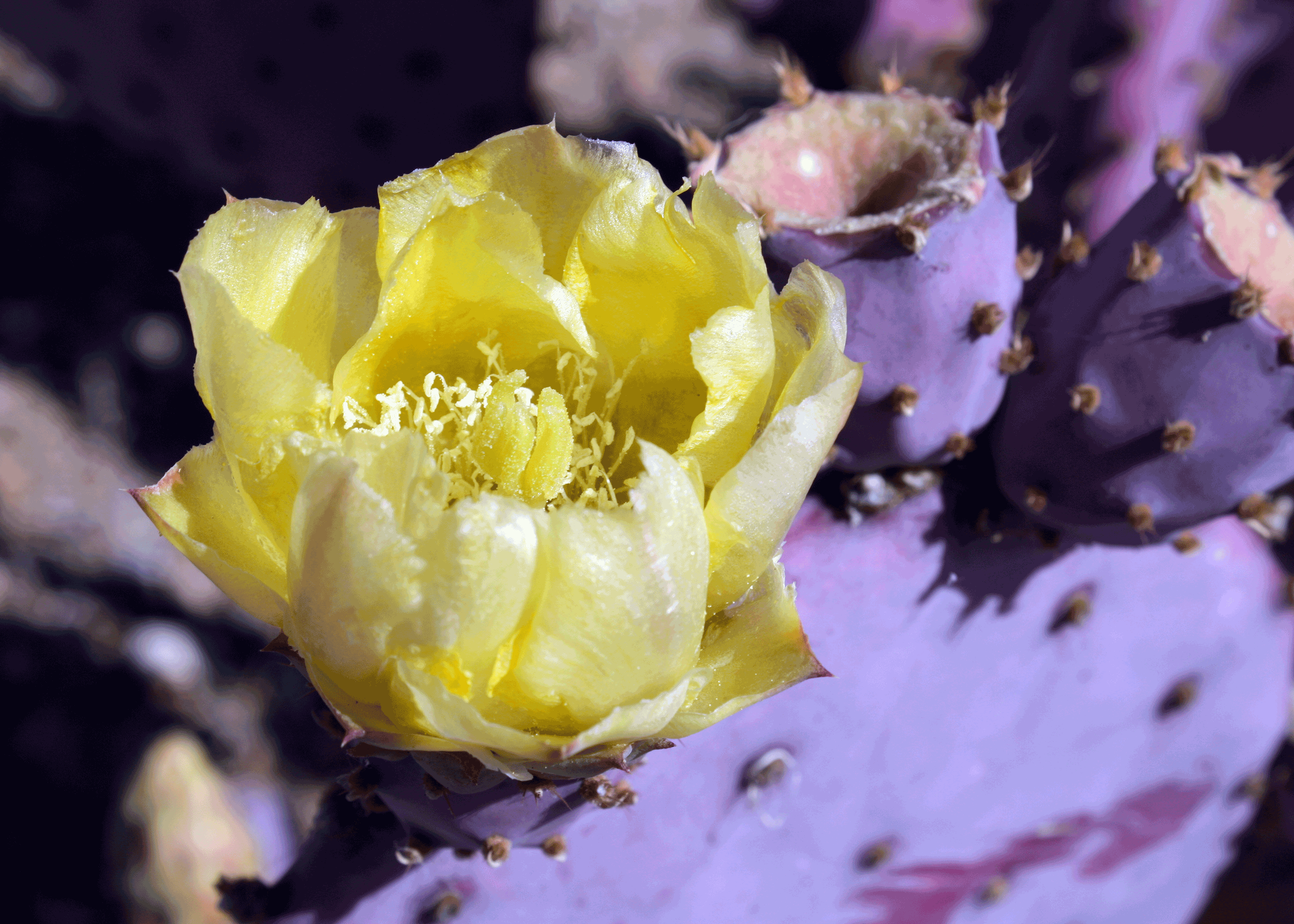 Image 2 of 3
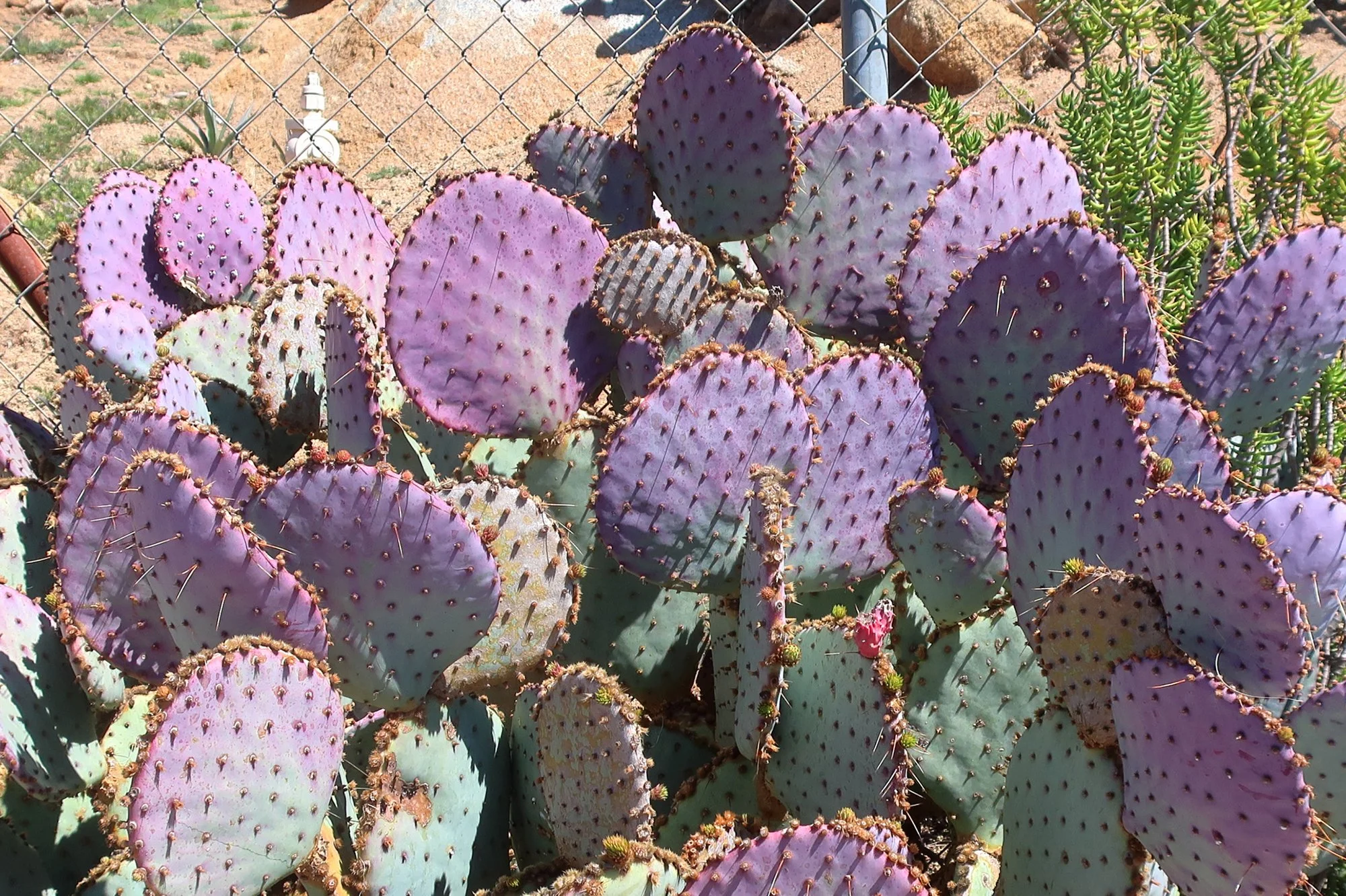 Image 3 of 3
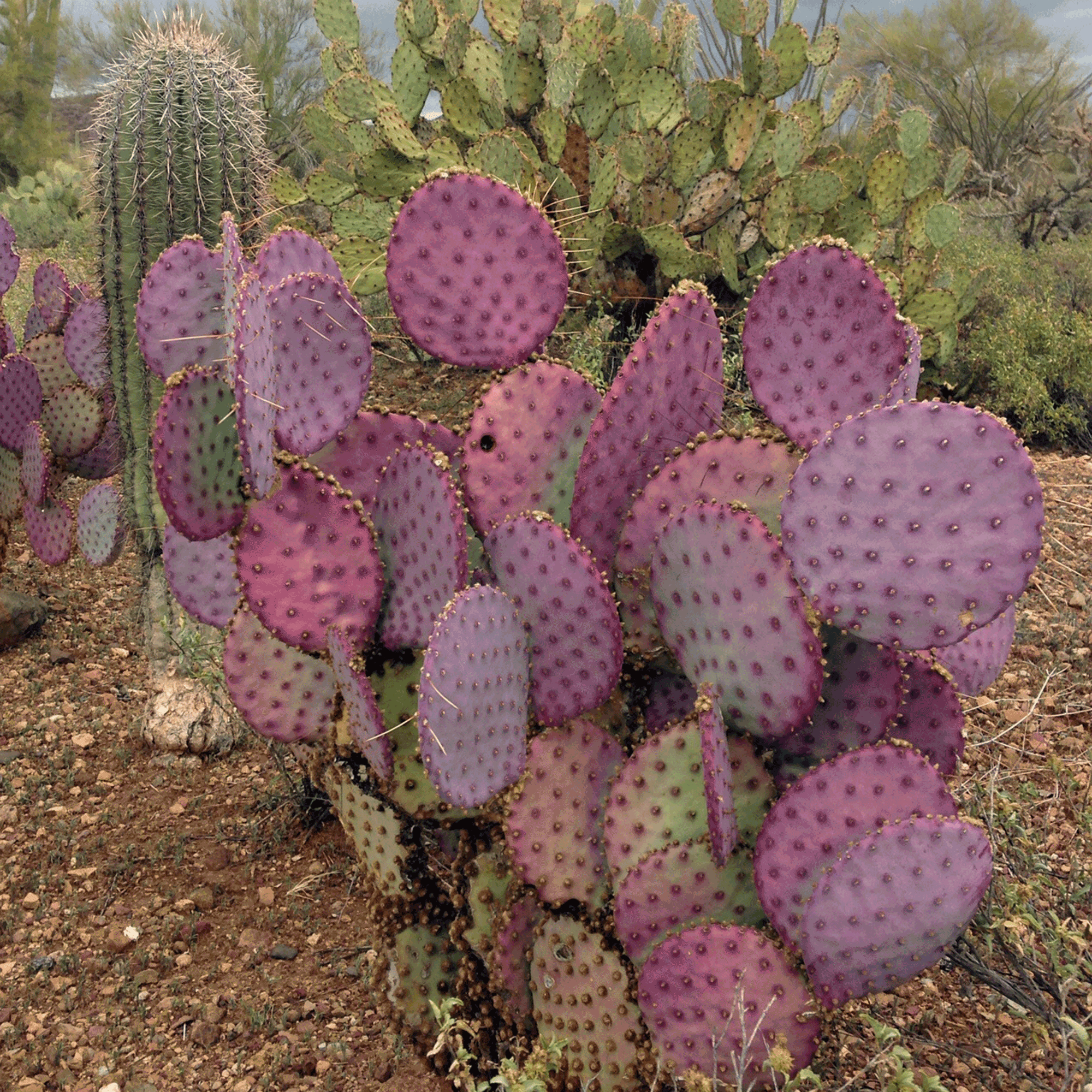
Botanical Name: Opuntia santa-rita
Common Names: Santa Rita Prickly Pear, Purple Prickly Pear, Violet Prickly Pear, Duraznilla
Opuntia santa-rita is a stunning prickly pear cactus native to the southwestern United States and northern Mexico. It features flat, paddle-shaped pads with reddish-purple highlights, especially when exposed to full sun. Hardy and drought-tolerant, this cactus can reach a mature size of 3–6 feet tall and 4–6 feet wide, making it a striking addition to gardens, containers, or xeriscape landscapes. SHIPPED AS A PAD, 4–8 INCHES ACROSS.
Care and Cultivation:
Thrives in full sun to bright indirect light
Water sparingly; allow soil to dry completely between waterings
Use a well-draining cactus or succulent soil mix
Suitable for containers, raised beds, or xeriscape landscapes
Frost Tolerance and Cold Hardiness:
Best suited for USDA Zones 9–11
Can tolerate brief light frost down to about 28°F (-2°C)
Prolonged freezing temperatures below 28°F (-2°C) may damage pads
Protect or move indoors when temperatures approach freezing
Winter Dormancy and Health:
Growth slows or stops during winter dormancy
Reduce watering significantly in colder months
Pads may appear slightly wrinkled or dull in winter—this is normal and not a sign of poor health
Note: Handle with care—pads have small spines and glochids
Botanical Name: Opuntia santa-rita
Common Names: Santa Rita Prickly Pear, Purple Prickly Pear, Violet Prickly Pear, Duraznilla
Opuntia santa-rita is a stunning prickly pear cactus native to the southwestern United States and northern Mexico. It features flat, paddle-shaped pads with reddish-purple highlights, especially when exposed to full sun. Hardy and drought-tolerant, this cactus can reach a mature size of 3–6 feet tall and 4–6 feet wide, making it a striking addition to gardens, containers, or xeriscape landscapes. SHIPPED AS A PAD, 4–8 INCHES ACROSS.
Care and Cultivation:
Thrives in full sun to bright indirect light
Water sparingly; allow soil to dry completely between waterings
Use a well-draining cactus or succulent soil mix
Suitable for containers, raised beds, or xeriscape landscapes
Frost Tolerance and Cold Hardiness:
Best suited for USDA Zones 9–11
Can tolerate brief light frost down to about 28°F (-2°C)
Prolonged freezing temperatures below 28°F (-2°C) may damage pads
Protect or move indoors when temperatures approach freezing
Winter Dormancy and Health:
Growth slows or stops during winter dormancy
Reduce watering significantly in colder months
Pads may appear slightly wrinkled or dull in winter—this is normal and not a sign of poor health
Note: Handle with care—pads have small spines and glochids