 Image 1 of 2
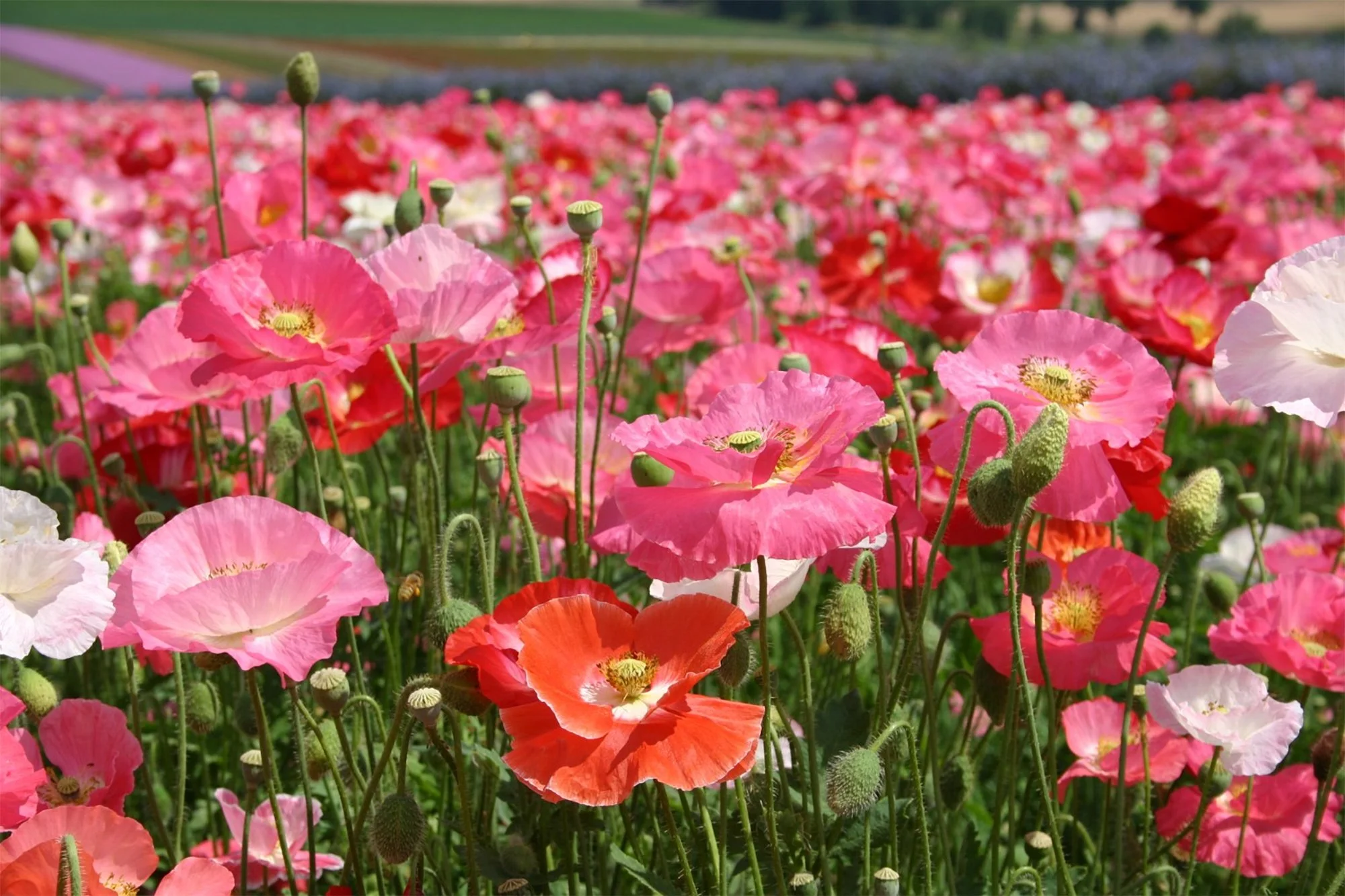 Image 2 of 2
Botanical Name: Papaver rhoeas (Shirley Group)
Common Names: Shirley Poppy, Shirley Poppy Mix
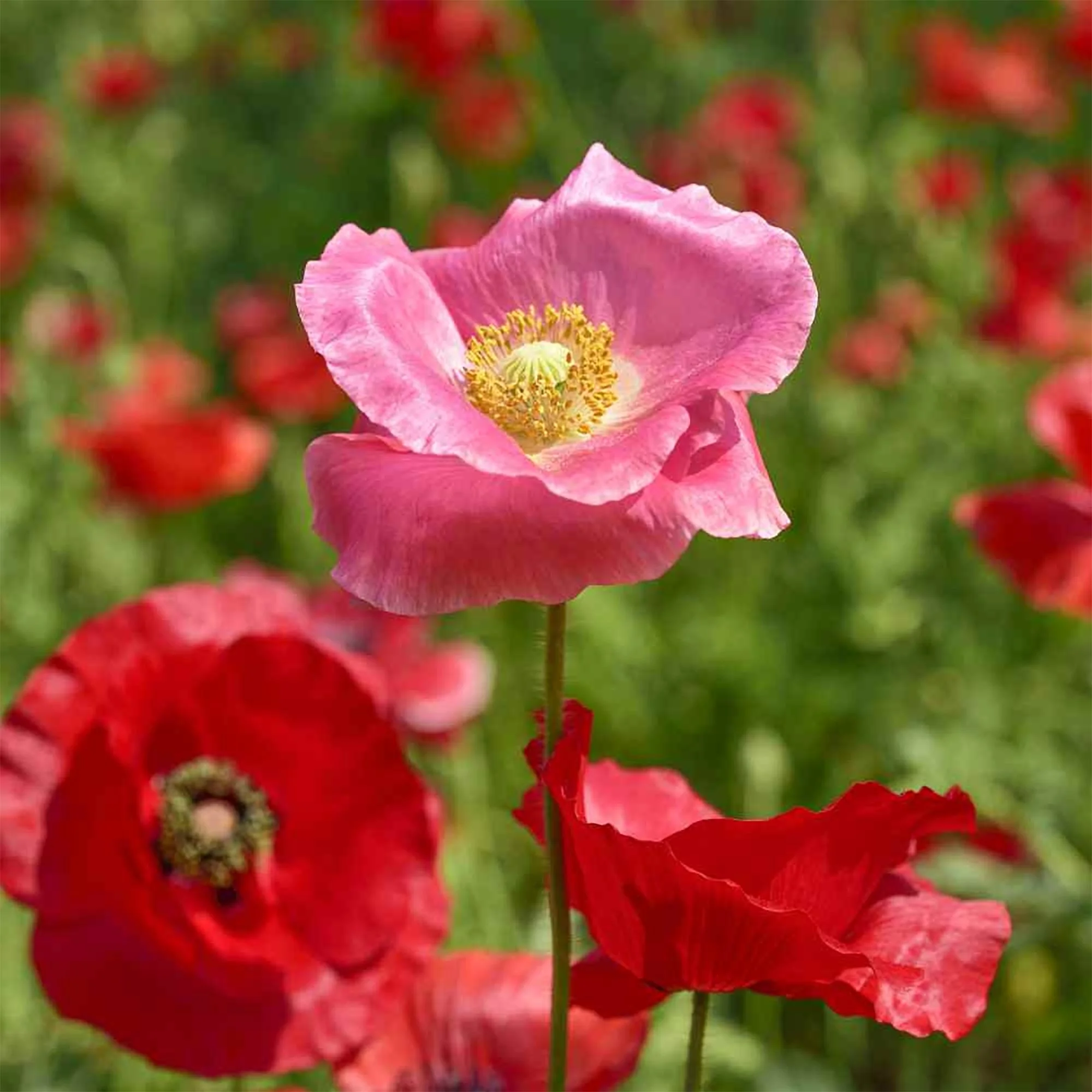
Shirley poppies are delicate, ornamental annuals derived from the European wild field poppy, Papaver rhoeas. This charming cultivar group was developed in the late 1800s by Reverend William Wilks in Shirley, England, who carefully selected and bred poppies with softer, more refined characteristics than their wild counterparts. Unlike the traditional field poppy, Shirley poppies feature silky, papery petals in a wide range of colors—from pure white and soft pastels to vibrant shades of pink, coral, and red—often without the dark basal blotches typical of wild forms. Some varieties also display elegant picotee edges or semi-double and double blooms, adding to their ornamental appeal.
These graceful flowers bring a light, airy presence to gardens, with slender stems that allow blooms to sway gently in the breeze. Growing to approximately 15–25 inches tall, Shirley poppies are ideal for cottage gardens, wildflower plantings, borders, and naturalized spaces. Their long blooming season, typically from spring into early summer, provides a continuous display of color. In addition to their beauty, they attract pollinators such as bees and butterflies, making them a valuable addition to wildlife-friendly gardens.
Shirley poppies are especially appreciated for their ease of growth. They perform best when direct-sown, as their deep taproots make transplanting difficult. Once established, they are relatively drought-tolerant and can reseed themselves naturally, returning year after year with minimal effort. Their ability to thrive in simple conditions makes them an excellent choice for both beginner and experienced gardeners.
Care and Cultivation:
• Prefers full sun for best flowering and sturdy growth
• Sow directly outdoors in early spring as soon as soil can be worked, or in fall in mild climates
• Requires well-draining, average soil
• Seeds need light to germinate; cover very lightly with fine soil
• Keep soil lightly moist during germination
• Thin seedlings to 4–6 inches apart for proper spacing
• USDA Zones: Grown as an annual; thrives between 50–75°F (10–24°C)
Frost Tolerance and Cold Hardiness:
• Tolerates light frost, with seedlings hardy to approximately 25°F (-4°C)
• Suitable for early spring sowing in cooler climates
• Established plants handle mild temperature fluctuations well
Winter Dormancy and Health:
• Completes life cycle within one growing season
• In mild climates, fall-sown seeds overwinter and bloom earlier in spring
• Allow seed pods to mature and drop for natural reseeding
Notes:
• Produces a wide range of pastel and vibrant blooms
• Includes single, semi-double, double, and picotee flower forms
• Attracts pollinators and supports biodiversity
• Drought-tolerant once established and low-maintenance
Botanical Name: Papaver rhoeas (Shirley Group)
Common Names: Shirley Poppy, Shirley Poppy Mix
Shirley poppies are delicate, ornamental annuals derived from the European wild field poppy, Papaver rhoeas. This charming cultivar group was developed in the late 1800s by Reverend William Wilks in Shirley, England, who carefully selected and bred poppies with softer, more refined characteristics than their wild counterparts. Unlike the traditional field poppy, Shirley poppies feature silky, papery petals in a wide range of colors—from pure white and soft pastels to vibrant shades of pink, coral, and red—often without the dark basal blotches typical of wild forms. Some varieties also display elegant picotee edges or semi-double and double blooms, adding to their ornamental appeal.
These graceful flowers bring a light, airy presence to gardens, with slender stems that allow blooms to sway gently in the breeze. Growing to approximately 15–25 inches tall, Shirley poppies are ideal for cottage gardens, wildflower plantings, borders, and naturalized spaces. Their long blooming season, typically from spring into early summer, provides a continuous display of color. In addition to their beauty, they attract pollinators such as bees and butterflies, making them a valuable addition to wildlife-friendly gardens.
Shirley poppies are especially appreciated for their ease of growth. They perform best when direct-sown, as their deep taproots make transplanting difficult. Once established, they are relatively drought-tolerant and can reseed themselves naturally, returning year after year with minimal effort. Their ability to thrive in simple conditions makes them an excellent choice for both beginner and experienced gardeners.
Care and Cultivation:
• Prefers full sun for best flowering and sturdy growth
• Sow directly outdoors in early spring as soon as soil can be worked, or in fall in mild climates
• Requires well-draining, average soil
• Seeds need light to germinate; cover very lightly with fine soil
• Keep soil lightly moist during germination
• Thin seedlings to 4–6 inches apart for proper spacing
• USDA Zones: Grown as an annual; thrives between 50–75°F (10–24°C)
Frost Tolerance and Cold Hardiness:
• Tolerates light frost, with seedlings hardy to approximately 25°F (-4°C)
• Suitable for early spring sowing in cooler climates
• Established plants handle mild temperature fluctuations well
Winter Dormancy and Health:
• Completes life cycle within one growing season
• In mild climates, fall-sown seeds overwinter and bloom earlier in spring
• Allow seed pods to mature and drop for natural reseeding
Notes:
• Produces a wide range of pastel and vibrant blooms
• Includes single, semi-double, double, and picotee flower forms
• Attracts pollinators and supports biodiversity
• Drought-tolerant once established and low-maintenance