Botanical Name: Parkinsonia florida
Common Names: Blue Palo Verde, Blue Paloverde, Foothill Palo Verde
Parkinsonia florida is a small to medium-sized desert tree native to the Sonoran Desert region of Arizona, California, and northwestern Mexico. It is highly valued for its striking blue-green bark, delicate fern-like foliage, and bright yellow spring flowers that cover the branches. Adapted to arid environments, it is drought-tolerant and provides shade, ornamental interest, and habitat for desert wildlife. Mature trees typically reach 15–30 feet tall and 15–25 feet wide.
Care and Cultivation:
Prefers full sun
Water sparingly once established; allow soil to dry between waterings
Adaptable to most well-draining soils, including sandy or rocky desert soils
Excellent for xeriscape landscapes, desert gardens, and street trees
Frost Tolerance and Cold Hardiness:
Best suited for USDA Zones 8–11
Can tolerate brief cold down to about 20°F (‑6°C)
Protect young trees from prolonged frost
Ideal growing temperatures: 65–105°F (18–40°C)
Winter Dormancy and Health:
Deciduous; loses leaves in cooler months or during drought
Minimal watering required during dormancy
Prune lightly to maintain shape and remove dead branches
Notes:
Iconic blue-green trunk and branches provide year-round visual interest
Produces bright yellow spring blooms
Drought-tolerant and low-maintenance once established
Attracts pollinators and birds in desert landscapes
Botanical Name: Parkinsonia florida
Common Names: Blue Palo Verde, Blue Paloverde, Foothill Palo Verde
Parkinsonia florida is a small to medium-sized desert tree native to the Sonoran Desert region of Arizona, California, and northwestern Mexico. It is highly valued for its striking blue-green bark, delicate fern-like foliage, and bright yellow spring flowers that cover the branches. Adapted to arid environments, it is drought-tolerant and provides shade, ornamental interest, and habitat for desert wildlife. Mature trees typically reach 15–30 feet tall and 15–25 feet wide.
Care and Cultivation:
Prefers full sun
Water sparingly once established; allow soil to dry between waterings
Adaptable to most well-draining soils, including sandy or rocky desert soils
Excellent for xeriscape landscapes, desert gardens, and street trees
Frost Tolerance and Cold Hardiness:
Best suited for USDA Zones 8–11
Can tolerate brief cold down to about 20°F (‑6°C)
Protect young trees from prolonged frost
Ideal growing temperatures: 65–105°F (18–40°C)
Winter Dormancy and Health:
Deciduous; loses leaves in cooler months or during drought
Minimal watering required during dormancy
Prune lightly to maintain shape and remove dead branches
Notes:
Iconic blue-green trunk and branches provide year-round visual interest
Produces bright yellow spring blooms
Drought-tolerant and low-maintenance once established
Attracts pollinators and birds in desert landscapes
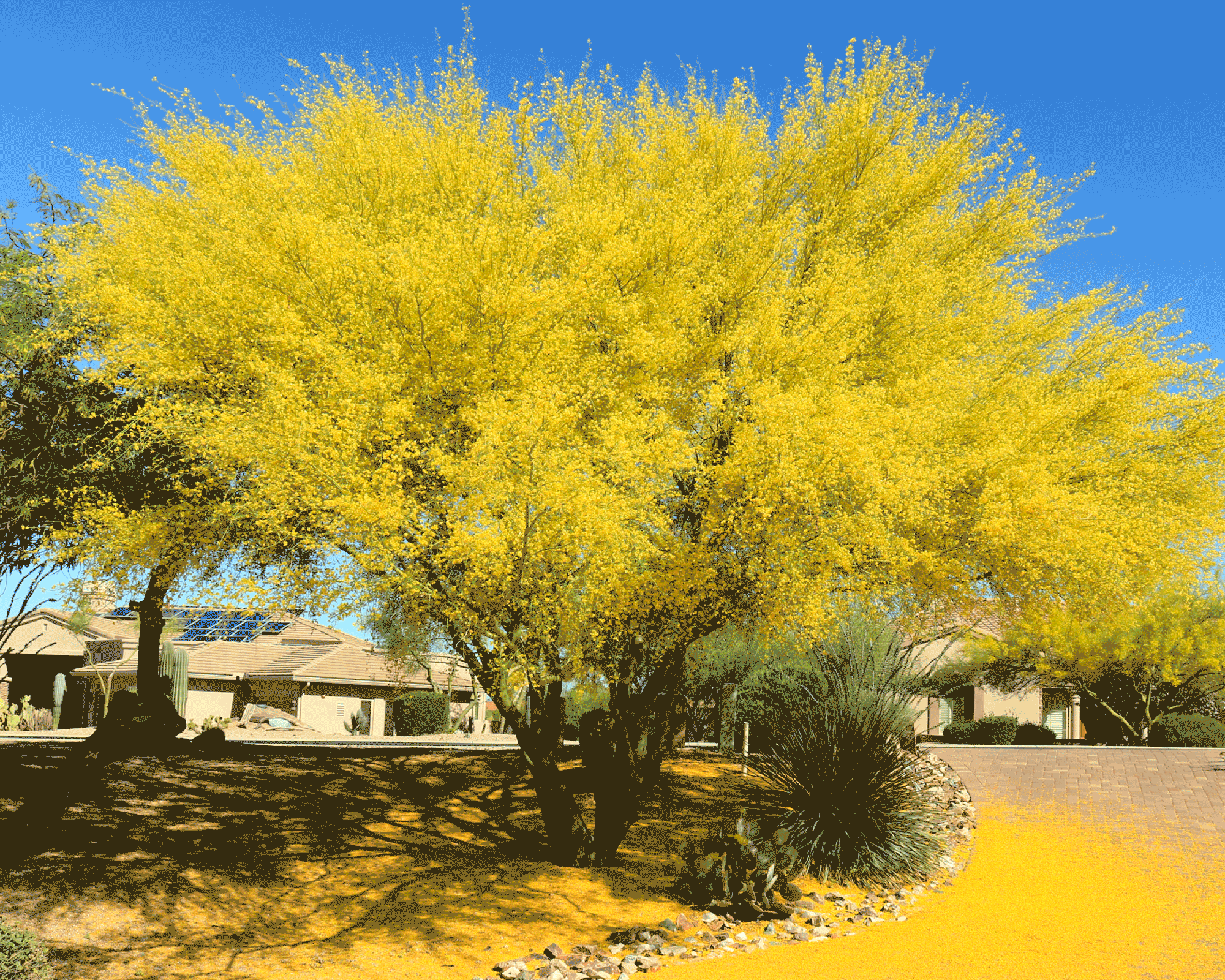 Image 1 of 6
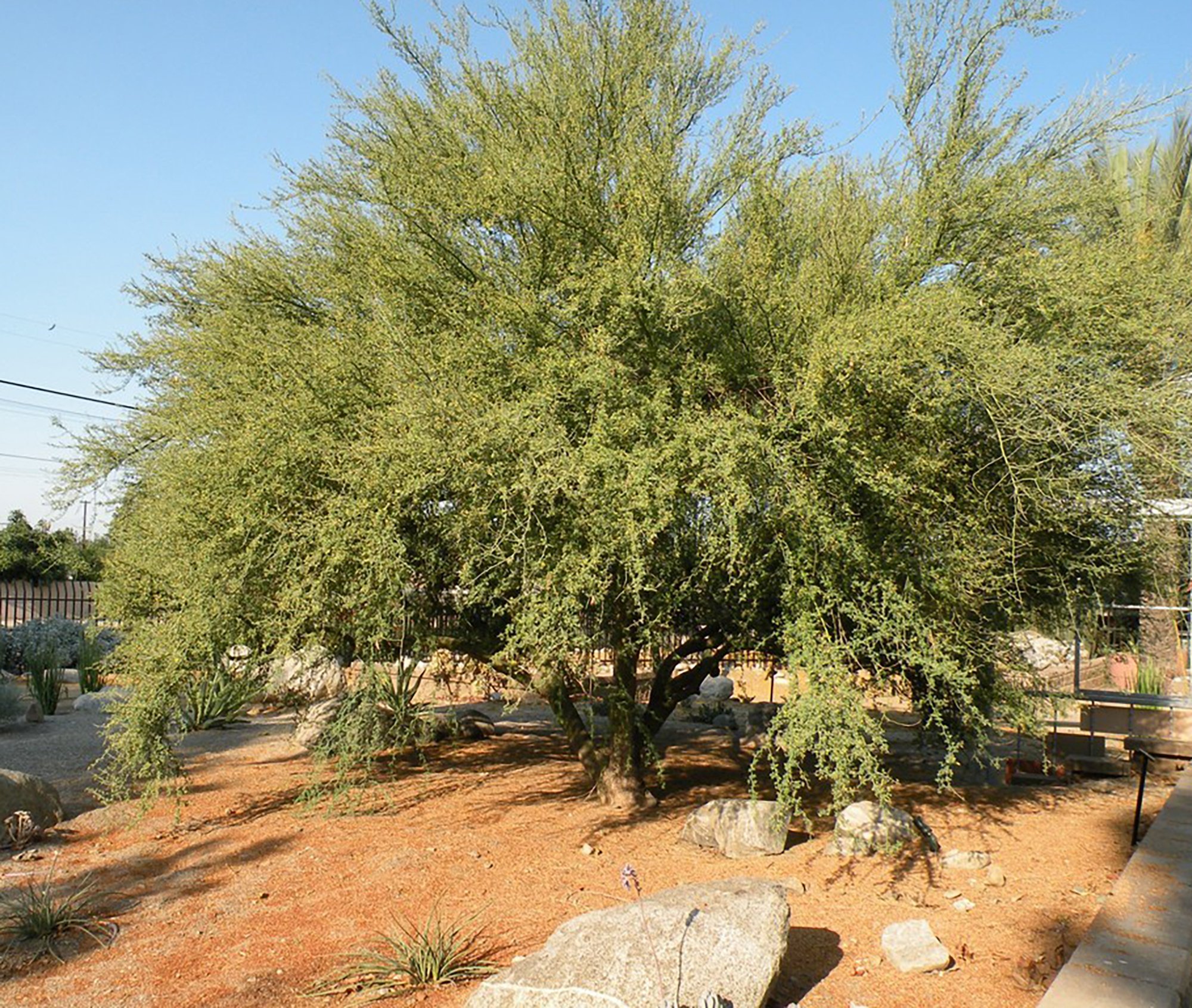 Image 2 of 6
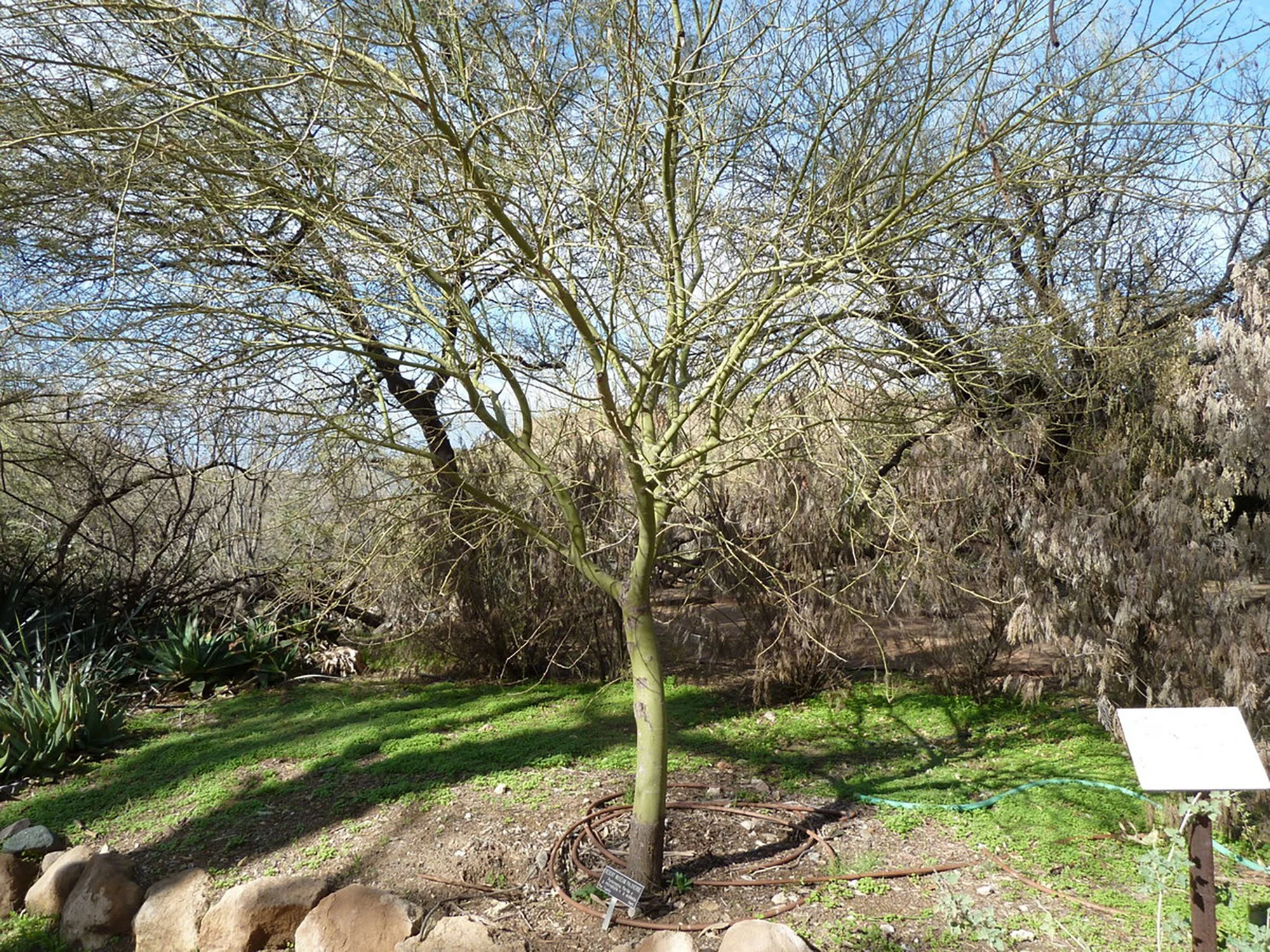 Image 3 of 6
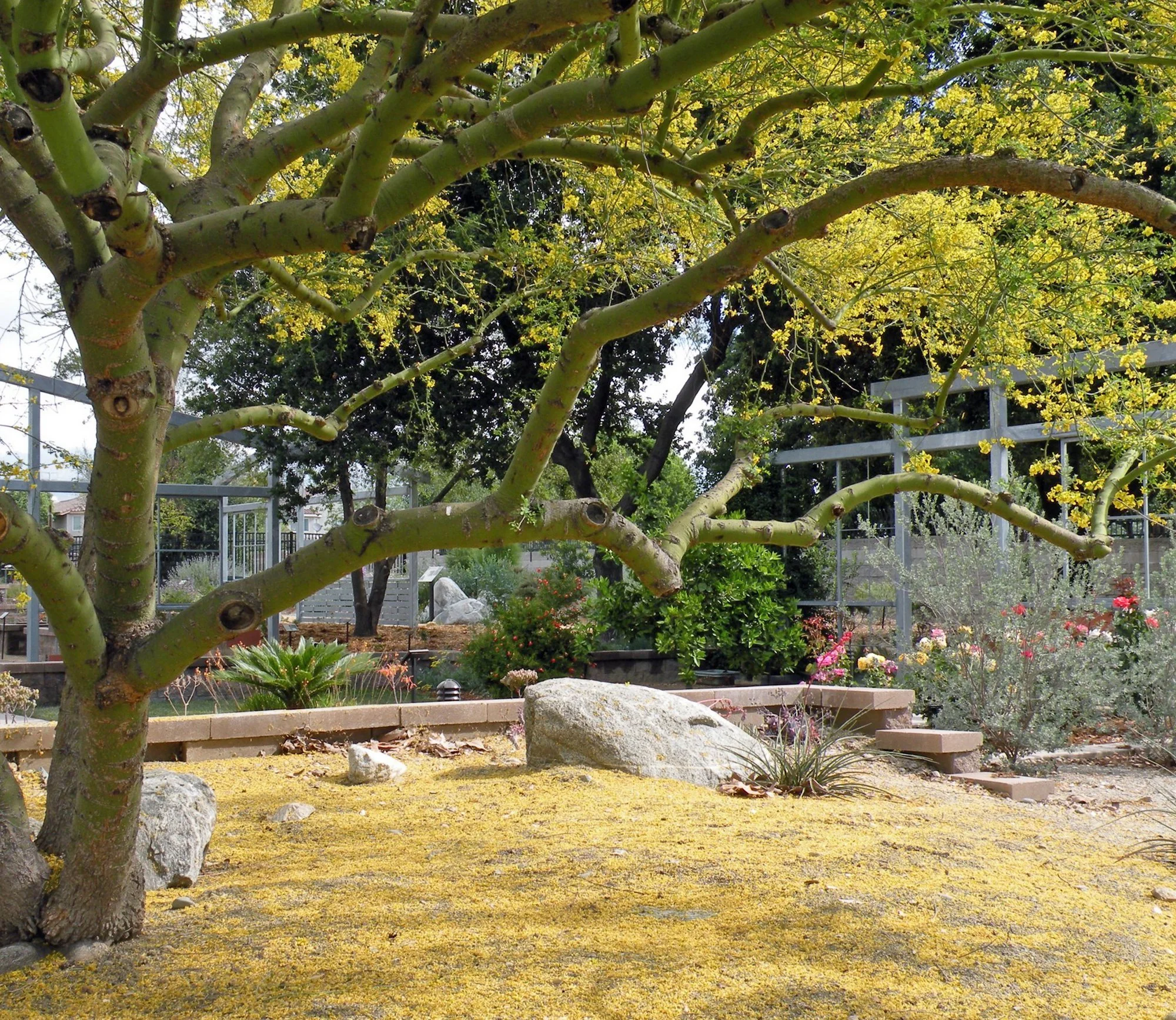 Image 4 of 6
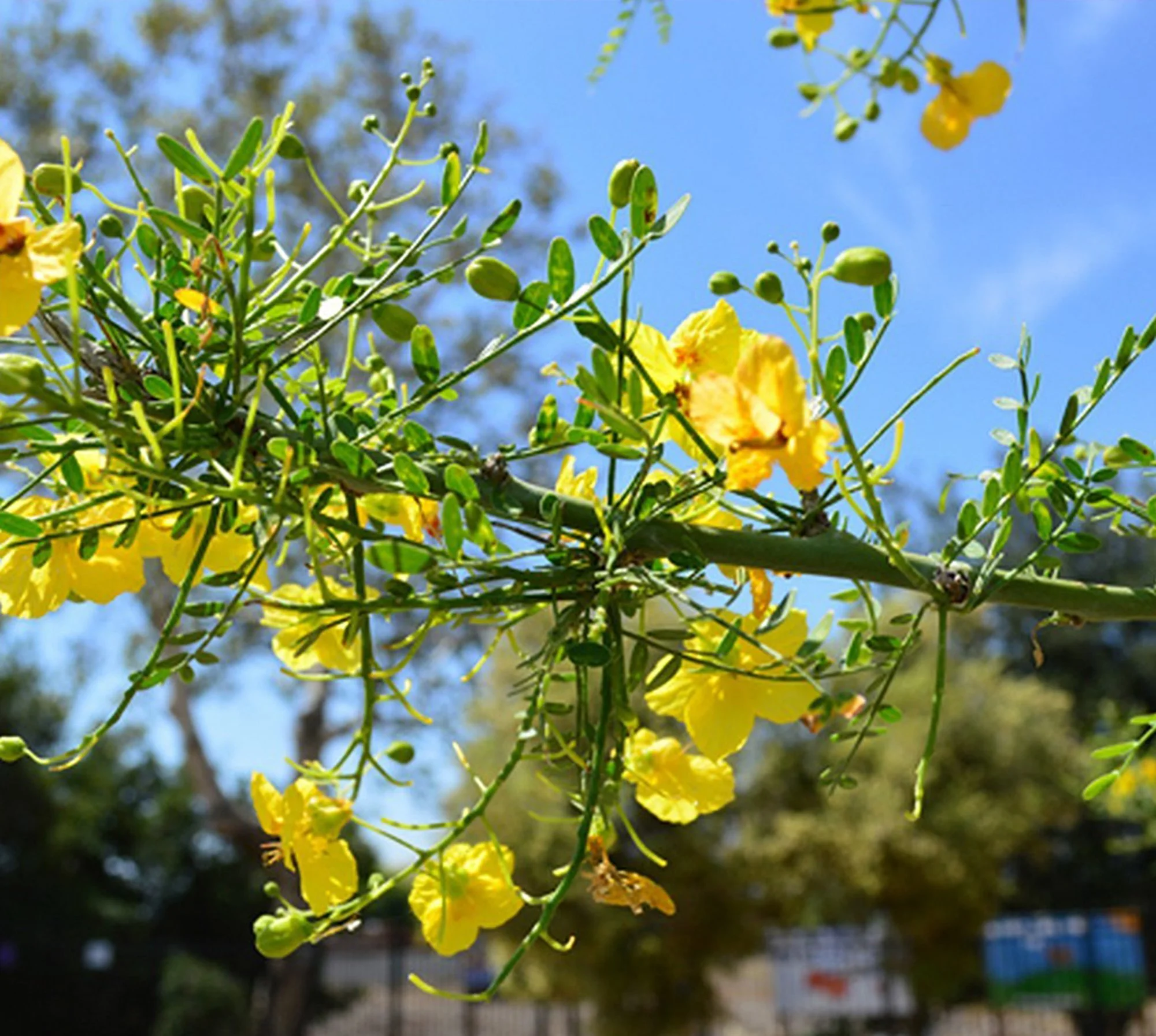 Image 5 of 6
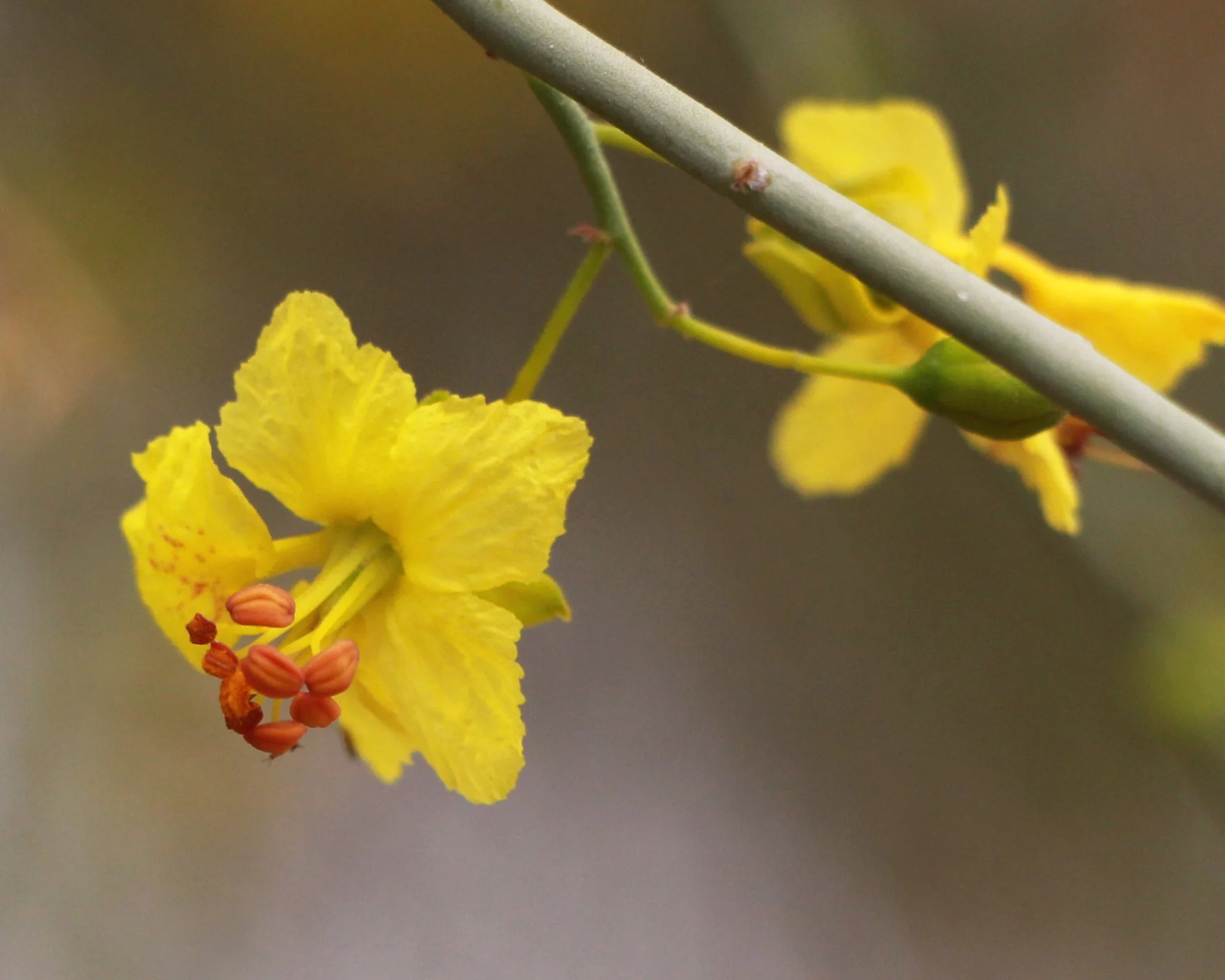 Image 6 of 6