 Image 1 of 2
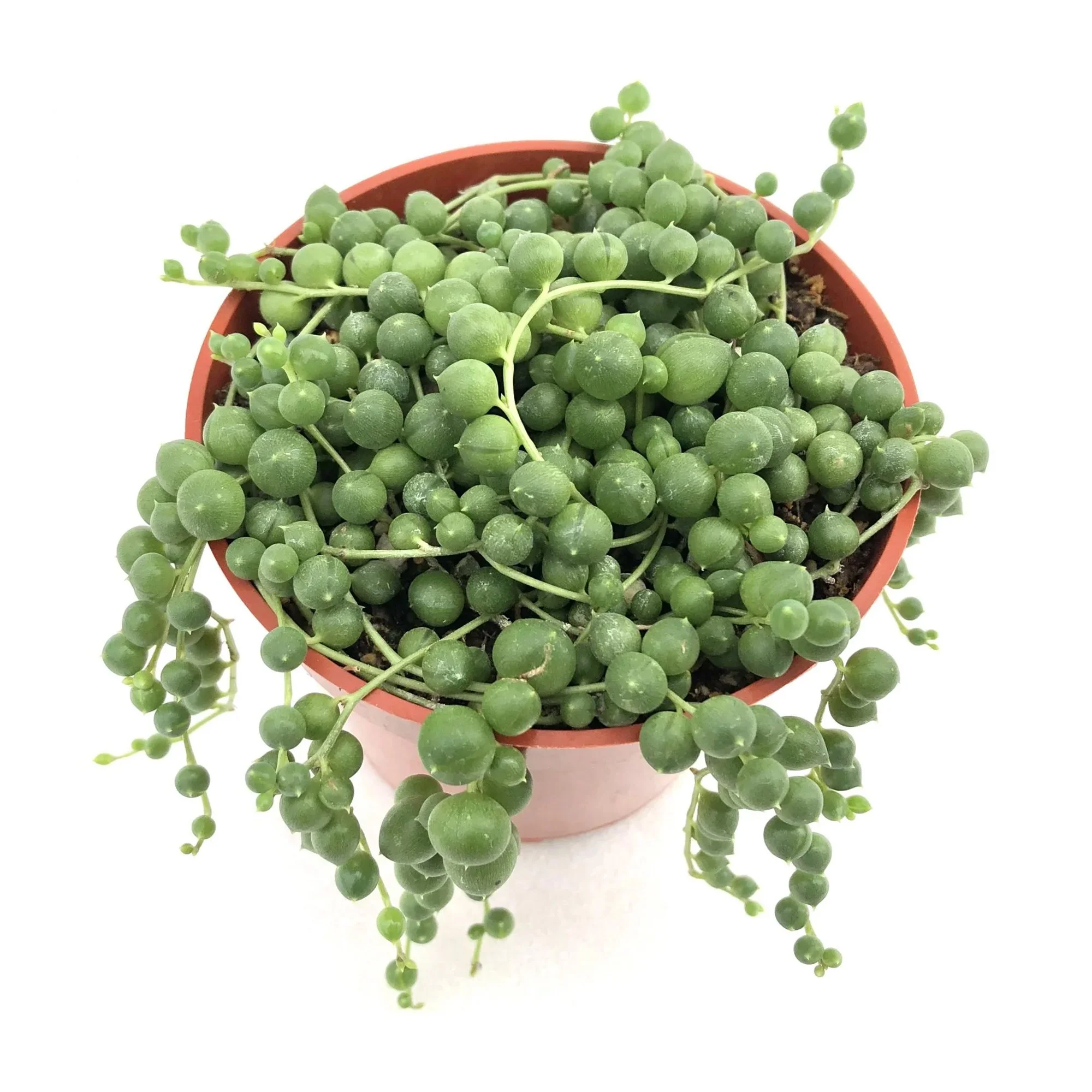 Image 2 of 2
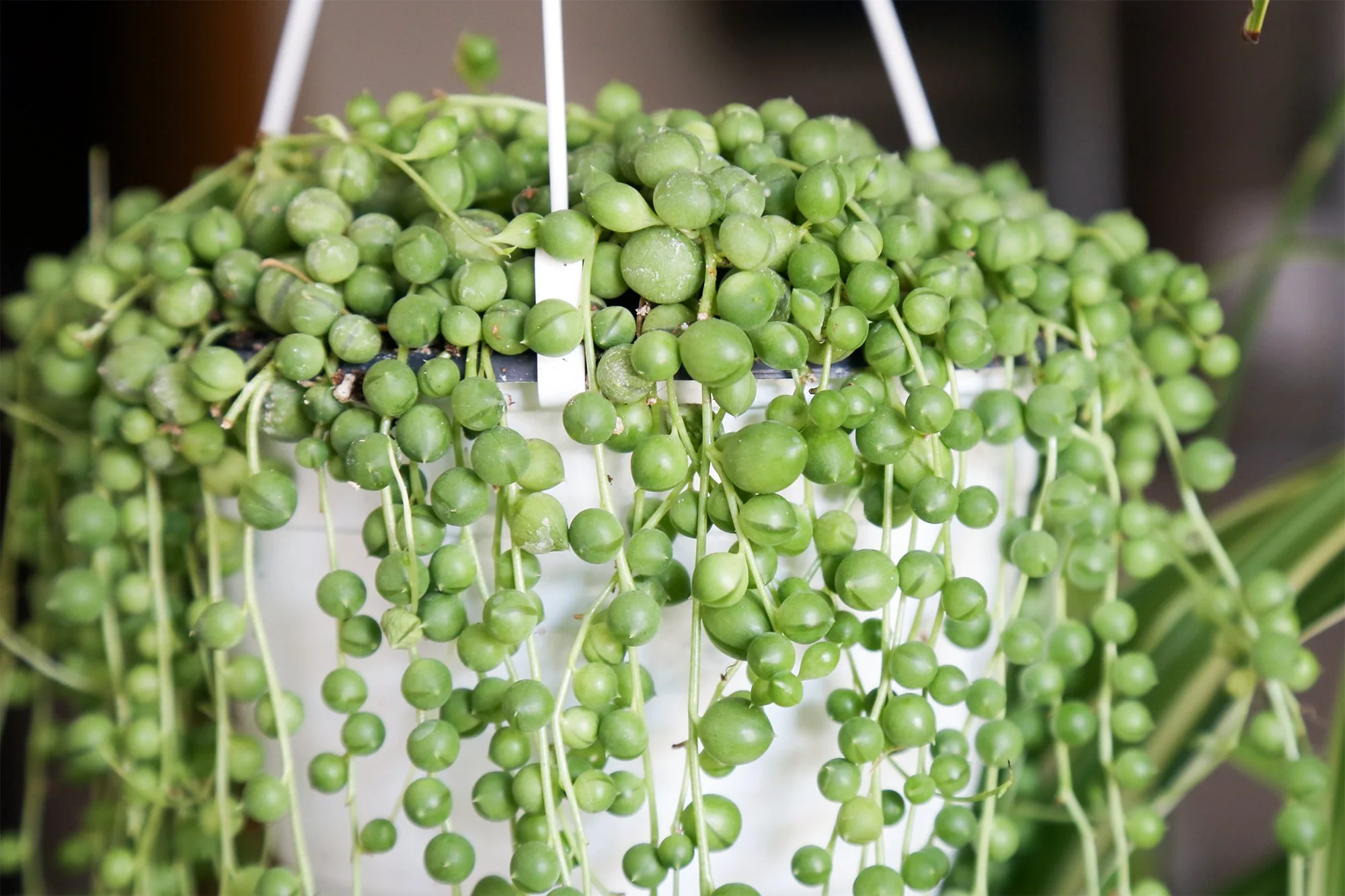
Botanical Name: Senecio rowleyanus
Common Name: String of Pearls
Senecio rowleyanus is a popular trailing succulent native to southwestern Africa. It features cascading stems lined with round, bead-like leaves that store water, giving the plant its distinctive “string of pearls” appearance. Perfect for hanging baskets or elevated planters, this succulent can trail 2–3 feet long when mature, adding texture and visual interest to indoor spaces.
Care and Cultivation:
Prefers bright, indirect light; tolerates some gentle direct sun
Water lightly; allow soil to dry between waterings
Use a fast-draining cactus or succulent soil mix
Ideal for hanging baskets, shelves, or containers
Frost Tolerance and Cold Hardiness:
Best grown in USDA Zones 9–11
Not frost-tolerant
Protect from temperatures below 30°F (-1°C)
Grown primarily as an indoor plant in cooler climates
Winter Dormancy and Health:
Growth slows during winter months
Reduce watering significantly in cooler conditions
Slight shriveling indicates thirst; mushy pearls indicate overwatering
Note: Fragile stems may shed pearls if handled roughly; handle with care
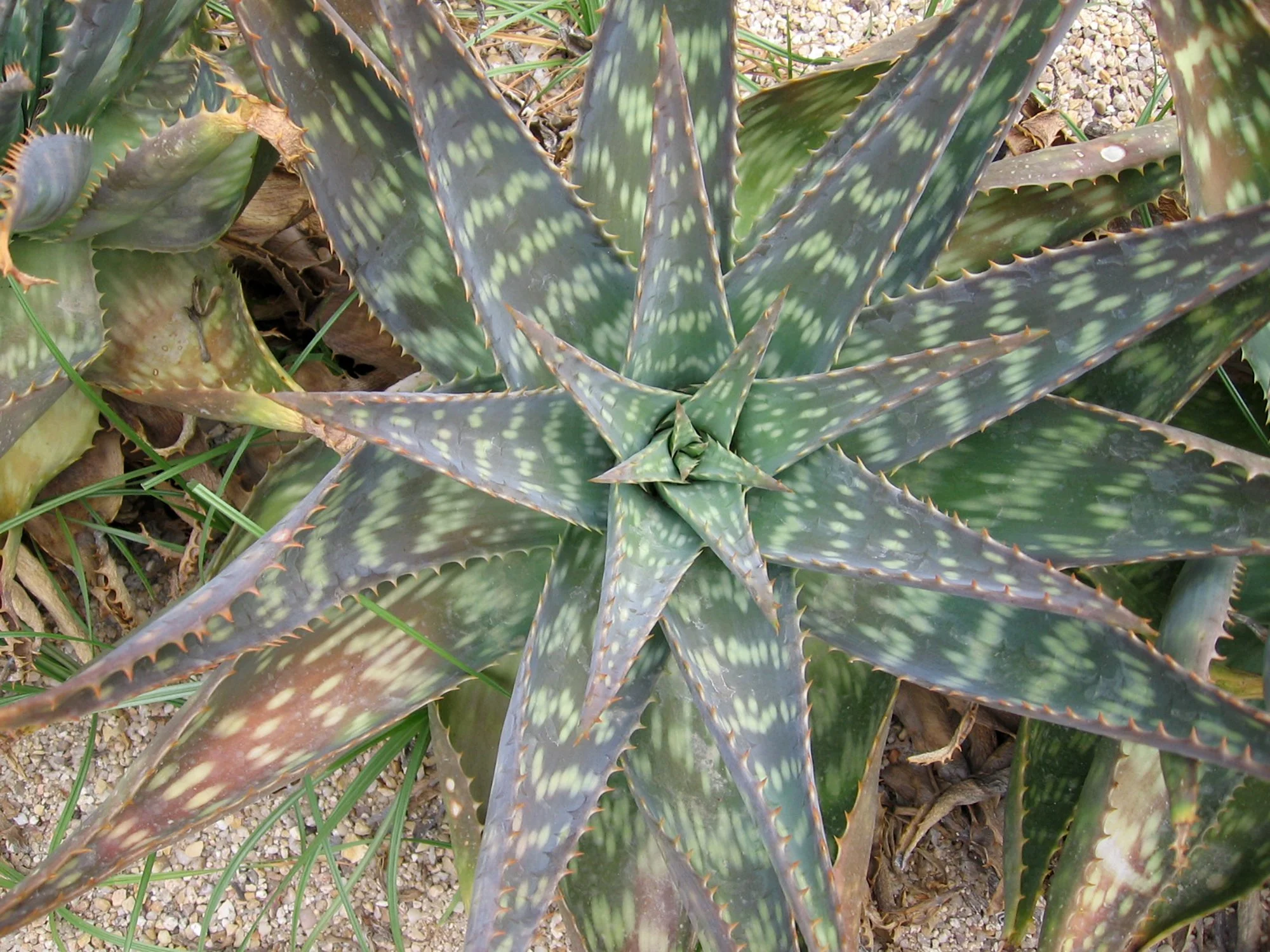
Image 1 by Wikimedia Commons user Maja Dumat
Botanical Name: Senecio rowleyanus
Common Name: String of Pearls
Senecio rowleyanus is a popular trailing succulent native to southwestern Africa. It features cascading stems lined with round, bead-like leaves that store water, giving the plant its distinctive “string of pearls” appearance. Perfect for hanging baskets or elevated planters, this succulent can trail 2–3 feet long when mature, adding texture and visual interest to indoor spaces.
Care and Cultivation:
Prefers bright, indirect light; tolerates some gentle direct sun
Water lightly; allow soil to dry between waterings
Use a fast-draining cactus or succulent soil mix
Ideal for hanging baskets, shelves, or containers
Frost Tolerance and Cold Hardiness:
Best grown in USDA Zones 9–11
Not frost-tolerant
Protect from temperatures below 30°F (-1°C)
Grown primarily as an indoor plant in cooler climates
Winter Dormancy and Health:
Growth slows during winter months
Reduce watering significantly in cooler conditions
Slight shriveling indicates thirst; mushy pearls indicate overwatering
Note: Fragile stems may shed pearls if handled roughly; handle with care
Image 1 by Wikimedia Commons user Maja Dumat