
 Image 1 of 3
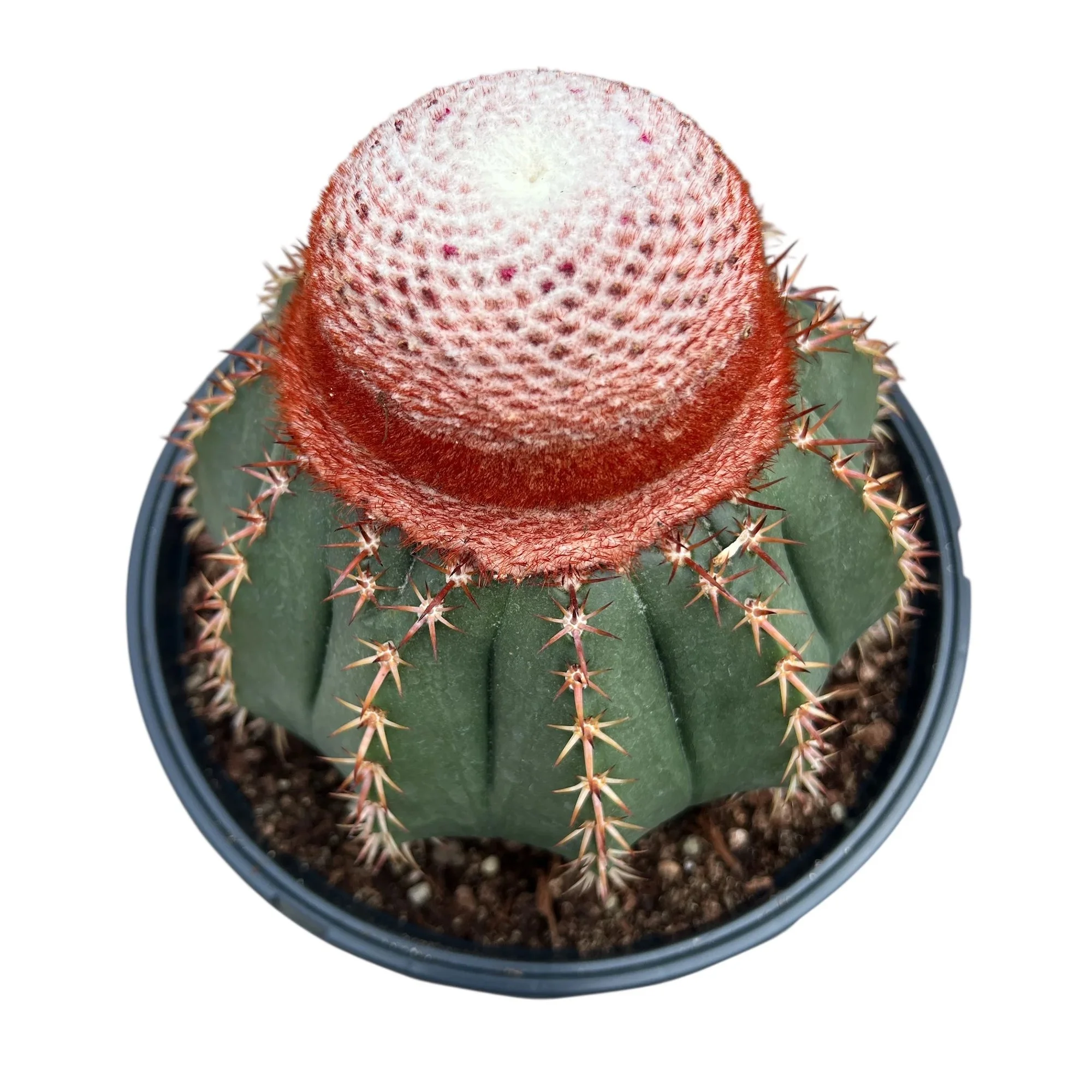 Image 2 of 3
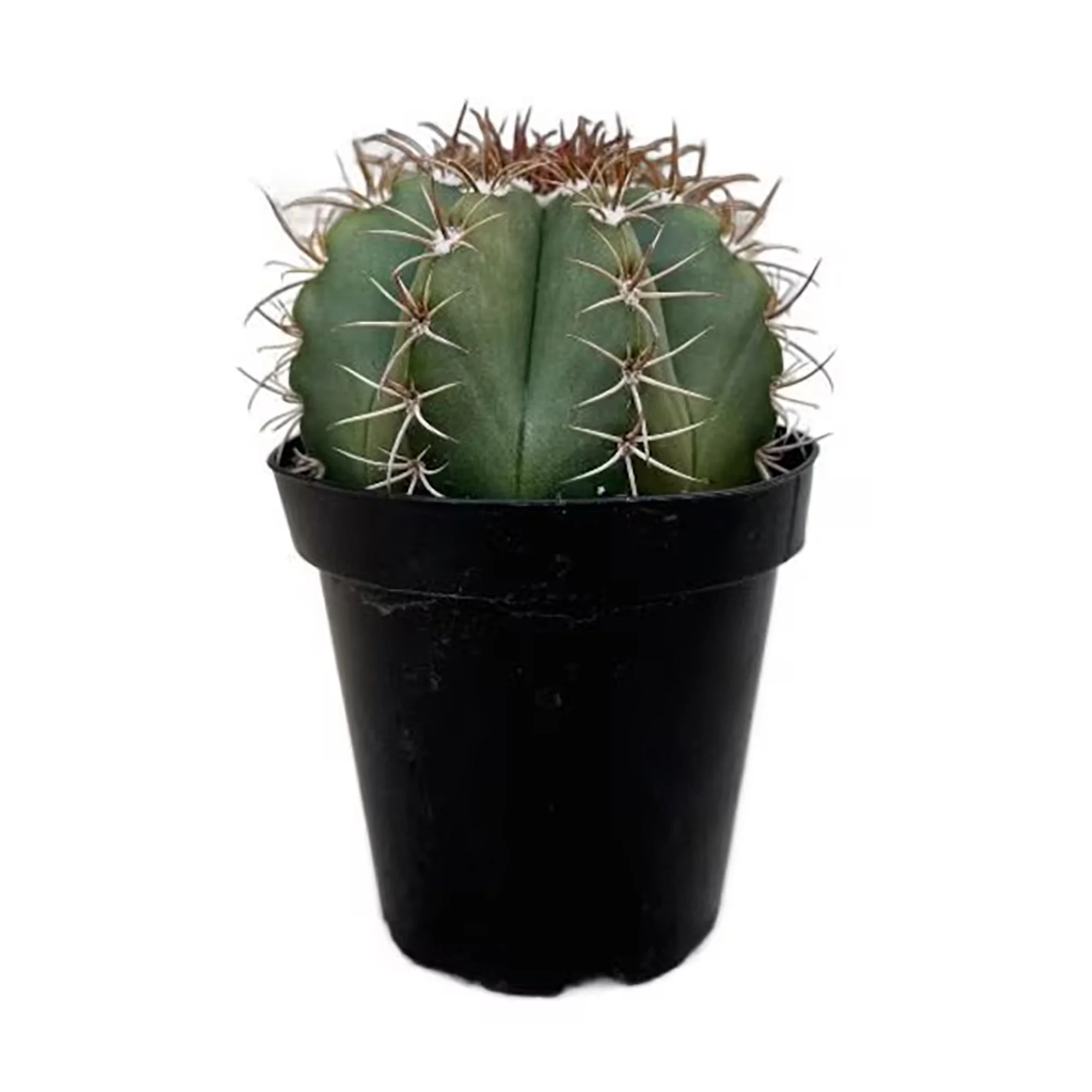 Image 3 of 3
Botanical Name: Melocactus conoideus
Common Names: Turk’s Cap Cactus, Pilosocereus Cap Cactus
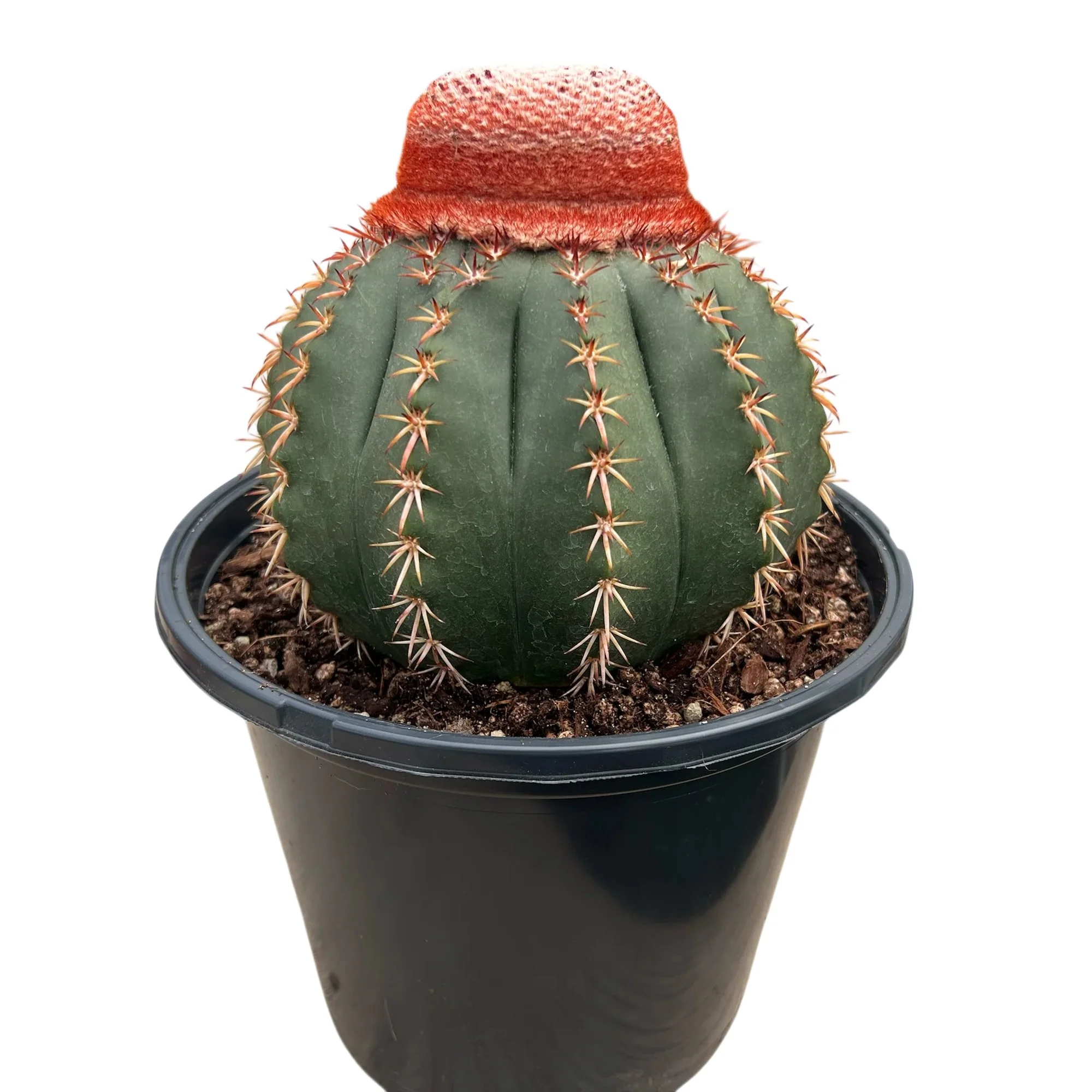
Melocactus conoideus is a globular cactus native to northeastern Brazil. It is instantly recognizable for its rounded, green body topped with a bright red cephalium—a woolly, cylindrical structure from which flowers and fruits emerge. This slow-growing species is prized by collectors for its unique flowering structure and dramatic form. Mature plants typically reach 6–12 inches tall (excluding the cephalium) and 6–10 inches wide, while the cephalium can add several additional inches in height.
Care and Cultivation:
Prefers full sun to bright light
Water sparingly during growth; allow soil to dry completely
Use a very fast-draining cactus or succulent soil mix
Best grown in containers for precise moisture control
Frost Tolerance and Cold Hardiness:
Best suited for USDA Zones 10–11
Not frost-tolerant; protect from temperatures below 50°F (10°C)
Ideal growing temperatures: 65–90°F (18–32°C)
Winter Dormancy and Health:
Growth slows in cooler months
Reduce watering significantly during winter
Maintain bright light and good airflow to prevent rot
Flowering occurs from the cephalium in mature plants
Notes:
Produces a distinctive red cephalium that produces flowers and fruits
Slow-growing and long-lived
Compact, globular body ideal for container growing
Highly prized by collectors
Botanical Name: Melocactus conoideus
Common Names: Turk’s Cap Cactus, Pilosocereus Cap Cactus
Melocactus conoideus is a globular cactus native to northeastern Brazil. It is instantly recognizable for its rounded, green body topped with a bright red cephalium—a woolly, cylindrical structure from which flowers and fruits emerge. This slow-growing species is prized by collectors for its unique flowering structure and dramatic form. Mature plants typically reach 6–12 inches tall (excluding the cephalium) and 6–10 inches wide, while the cephalium can add several additional inches in height.
Care and Cultivation:
Prefers full sun to bright light
Water sparingly during growth; allow soil to dry completely
Use a very fast-draining cactus or succulent soil mix
Best grown in containers for precise moisture control
Frost Tolerance and Cold Hardiness:
Best suited for USDA Zones 10–11
Not frost-tolerant; protect from temperatures below 50°F (10°C)
Ideal growing temperatures: 65–90°F (18–32°C)
Winter Dormancy and Health:
Growth slows in cooler months
Reduce watering significantly during winter
Maintain bright light and good airflow to prevent rot
Flowering occurs from the cephalium in mature plants
Notes:
Produces a distinctive red cephalium that produces flowers and fruits
Slow-growing and long-lived
Compact, globular body ideal for container growing
Highly prized by collectors