 Image 1 of 3
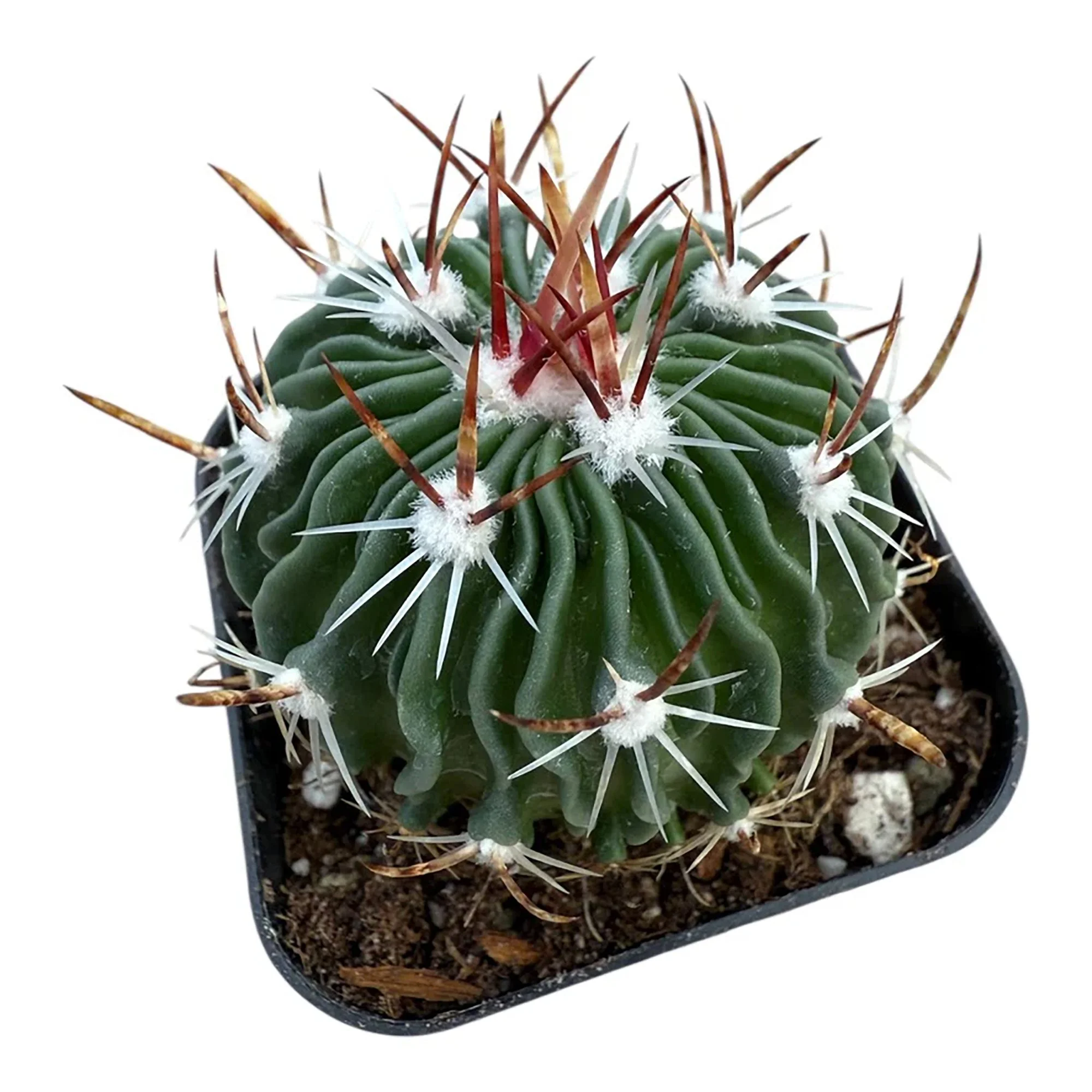 Image 2 of 3
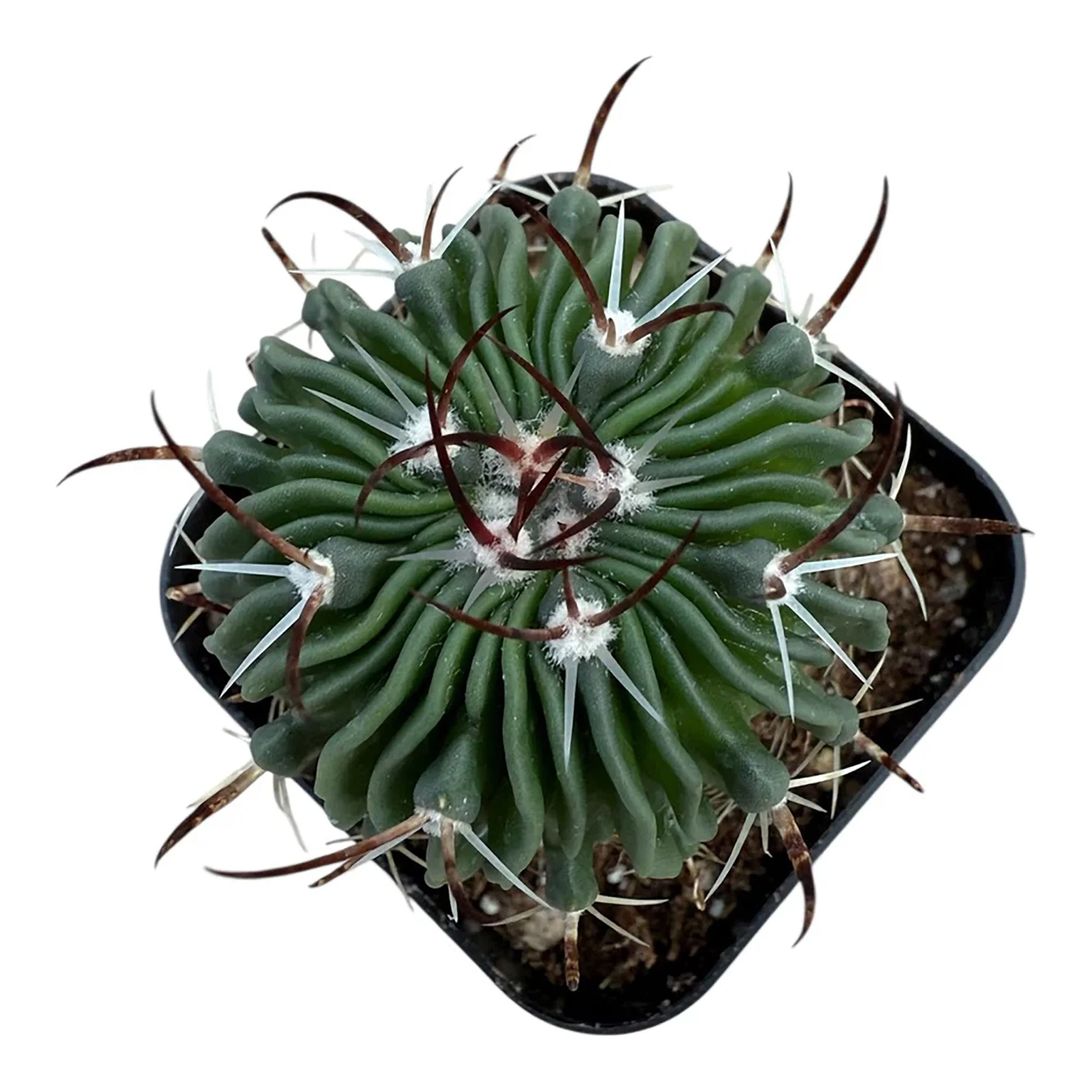 Image 3 of 3
Botanical Name: Echinofossulocactus crispatus
Common Names: Crystal Cactus, Echinofossulocactus
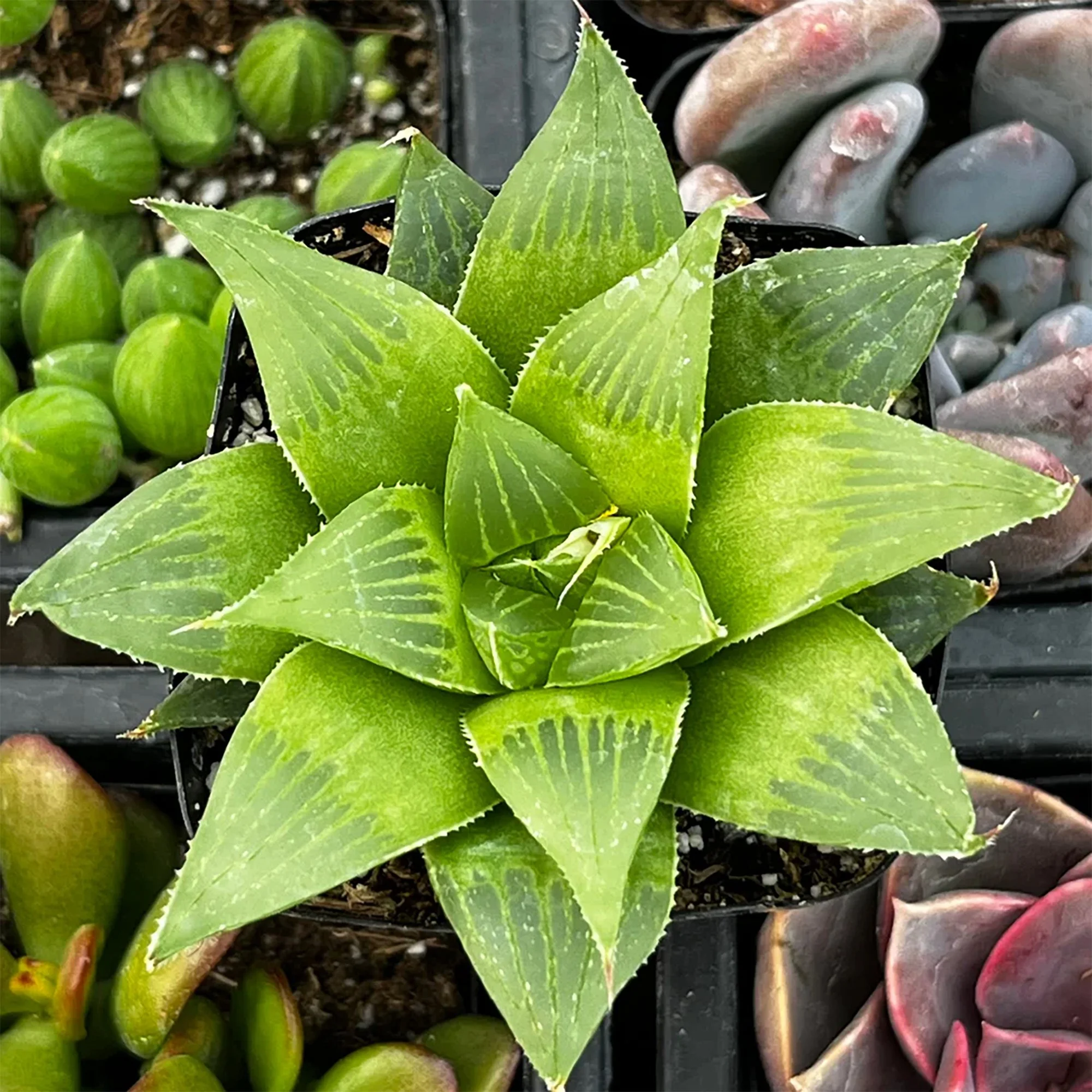
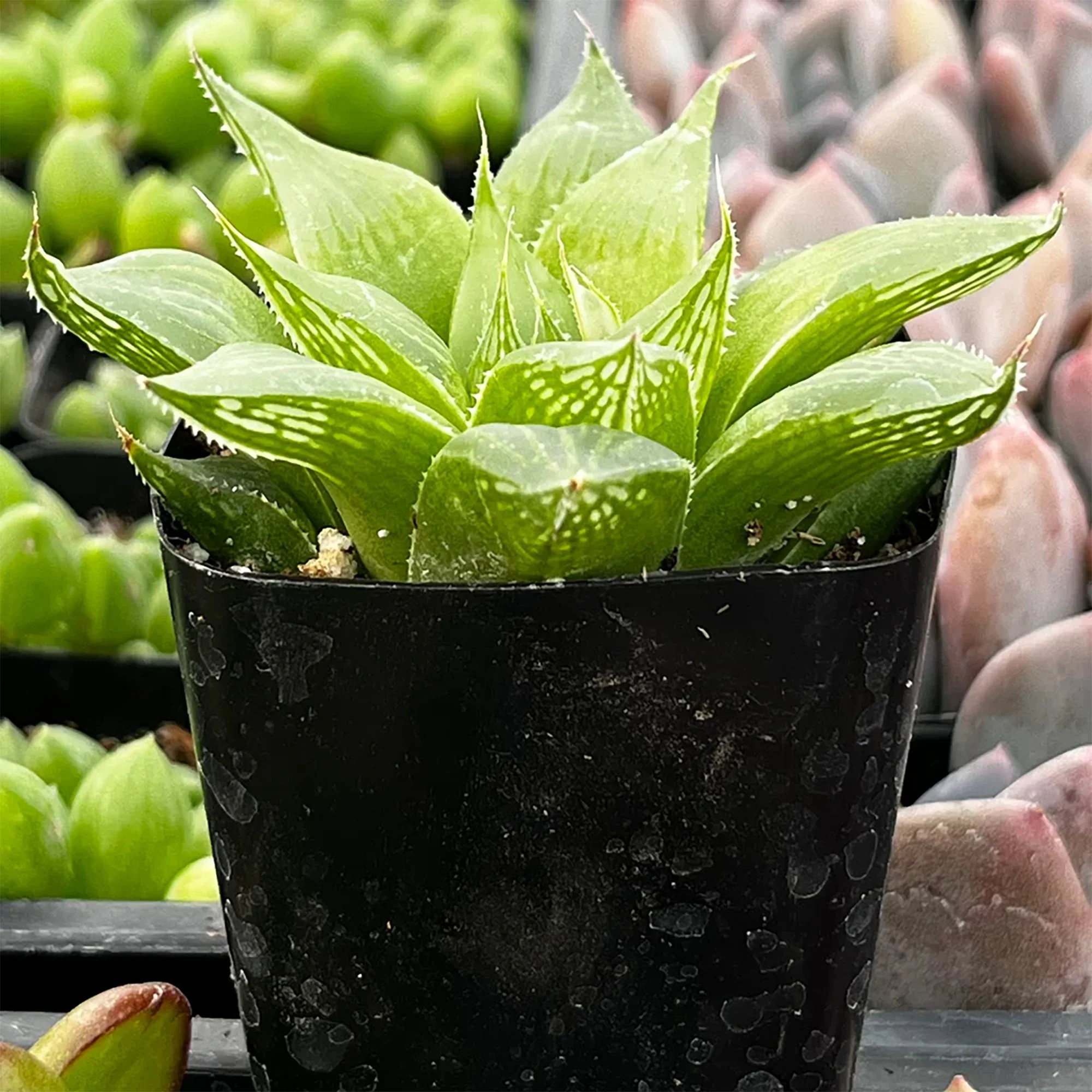
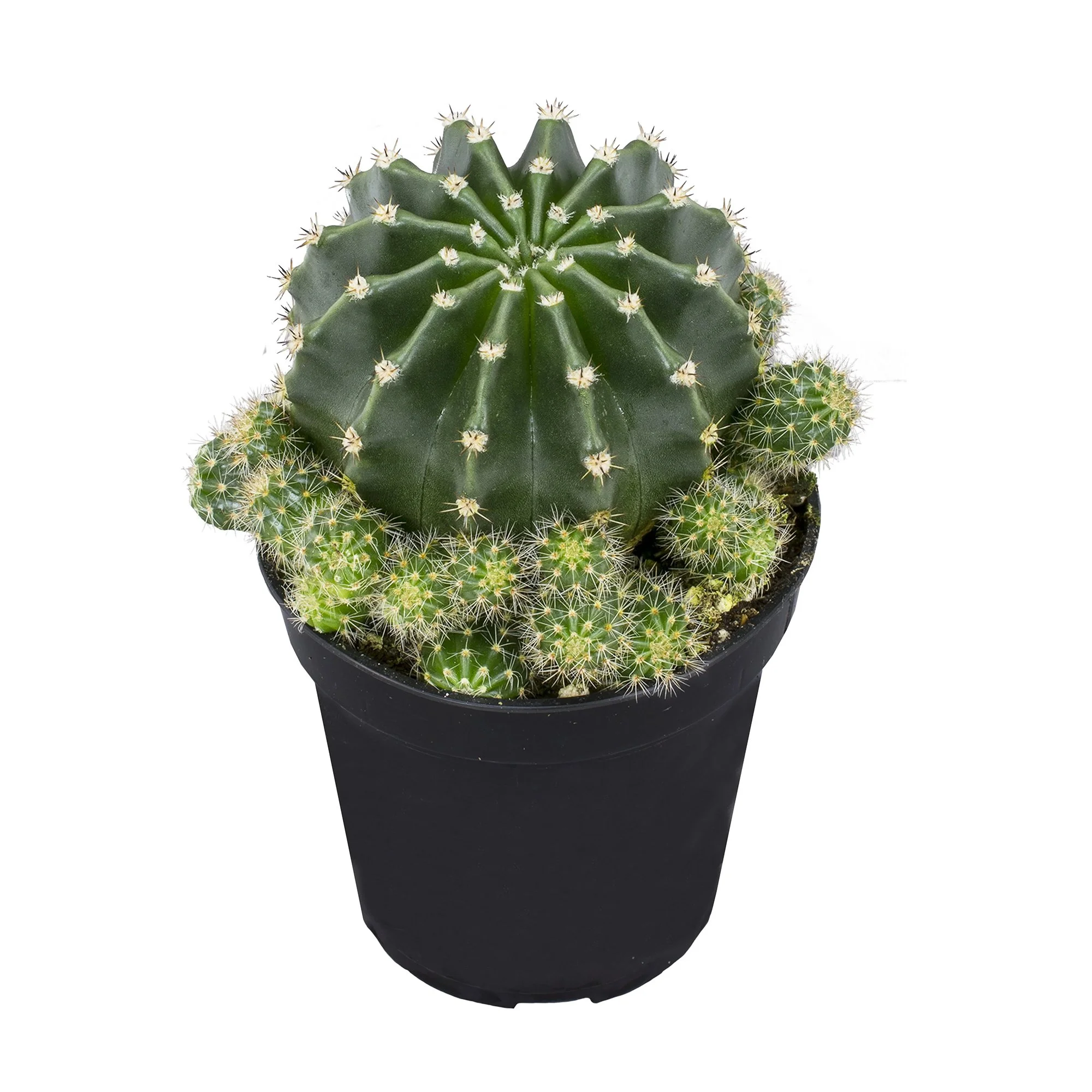
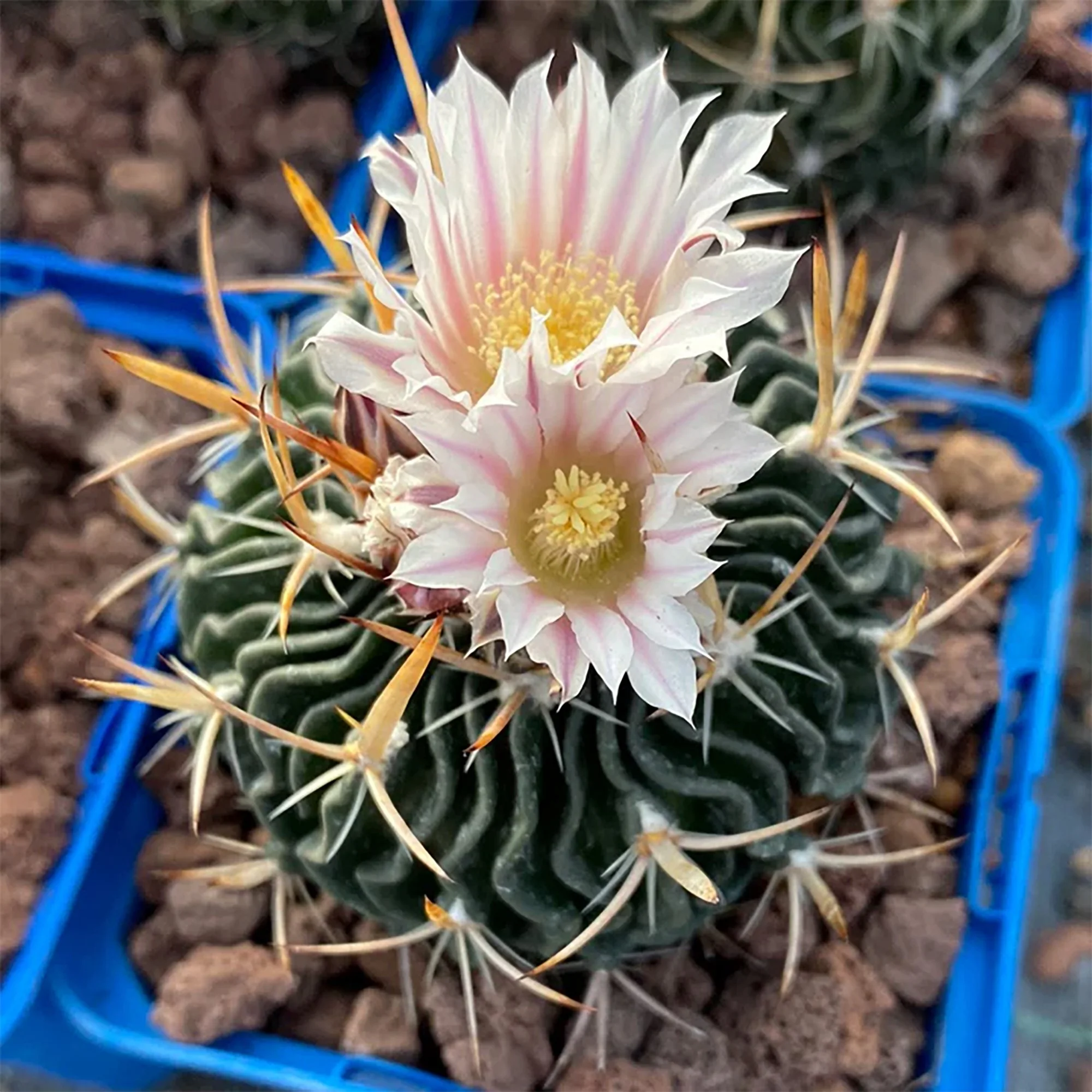
Echinofossulocactus crispatus is a small, globular cactus native to Mexico, prized for its densely packed, wavy ribs and fine, white spination that gives the plant a frosted, crystalline appearance. This miniature species is slow-growing and forms solitary heads or small clumps over time. Its unique texture and compact size make it ideal for containers, rock gardens, and cactus collections. Mature plants typically remain under 6 inches tall and wide.
Care and Cultivation:
Prefers bright light to full sun
Water sparingly; allow soil to dry completely between waterings
Use a fast-draining cactus or succulent soil mix
Excellent for small containers and indoor growing
Frost Tolerance and Cold Hardiness:
Best suited for USDA Zones 9–11
Can tolerate brief cold down to 25°F (-4°C) when dry
Protect from frost and prolonged cold
Ideal growing temperatures: 60–85°F (16–29°C)
Winter Dormancy and Health:
Growth slows during winter
Reduce watering significantly in colder months
Maintain bright light and good airflow during dormancy
Notes:
Unique, frosted appearance with wavy ribs
Compact and miniature growth habit
Forms small clumps over time
Beginner-friendly and decorative
Botanical Name: Echinofossulocactus crispatus
Common Names: Crystal Cactus, Echinofossulocactus
Echinofossulocactus crispatus is a small, globular cactus native to Mexico, prized for its densely packed, wavy ribs and fine, white spination that gives the plant a frosted, crystalline appearance. This miniature species is slow-growing and forms solitary heads or small clumps over time. Its unique texture and compact size make it ideal for containers, rock gardens, and cactus collections. Mature plants typically remain under 6 inches tall and wide.
Care and Cultivation:
Prefers bright light to full sun
Water sparingly; allow soil to dry completely between waterings
Use a fast-draining cactus or succulent soil mix
Excellent for small containers and indoor growing
Frost Tolerance and Cold Hardiness:
Best suited for USDA Zones 9–11
Can tolerate brief cold down to 25°F (-4°C) when dry
Protect from frost and prolonged cold
Ideal growing temperatures: 60–85°F (16–29°C)
Winter Dormancy and Health:
Growth slows during winter
Reduce watering significantly in colder months
Maintain bright light and good airflow during dormancy
Notes:
Unique, frosted appearance with wavy ribs
Compact and miniature growth habit
Forms small clumps over time
Beginner-friendly and decorative